
How to Make Money From a Newsletter (2026 Guide)

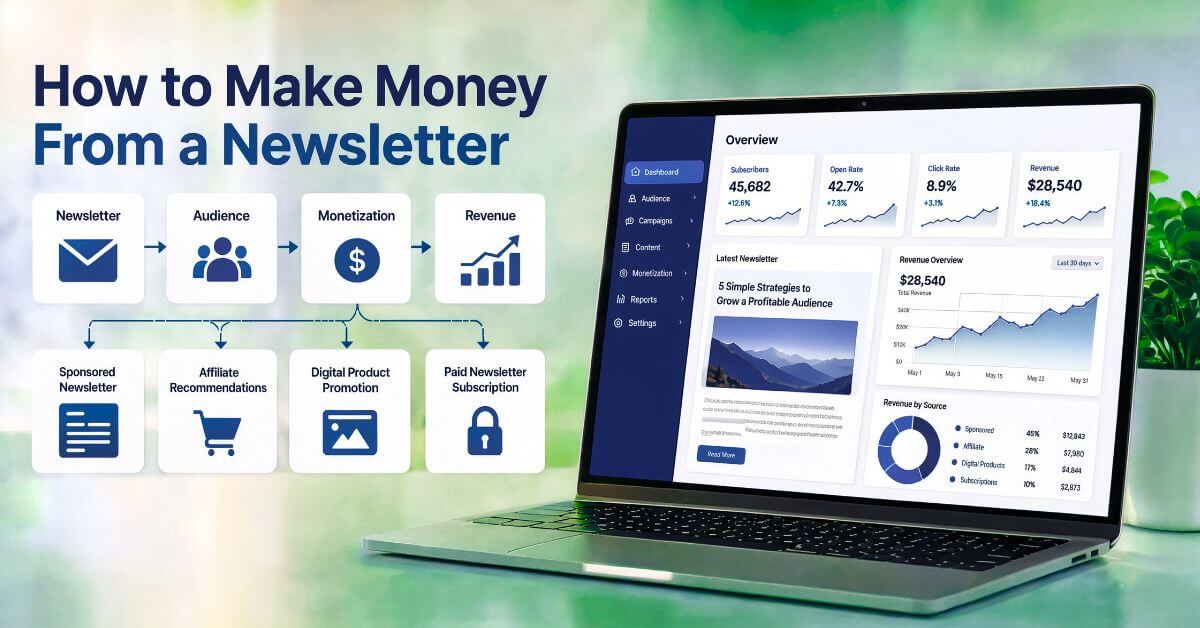
Many people who’ve built a solid email list wonder how to make money from a newsletter. It’s a common question because you’ve worked to grow your audience, so it makes sense to want a return on that effort.
But newsletter monetization has flipped in the past two years. Sponsorships and ads used to be the default path. Now, on Beehiiv’s platform data, subscription revenue has grown from about 30% to 85% of total creator earnings in one year.
That doesn’t mean ads are dead. The fastest-growing path is readers paying you directly, and most guides haven’t caught up to that shift.
This guide covers every real revenue path: sponsorships, paid subscriptions, affiliate income, and digital products, with actual rate benchmarks instead of vague “it depends” answers.
Key Numbers Before You Start
A few figures set realistic expectations before you pick a monetization path.
Paid newsletter subscriptions convert at a median of about 0.62% of free subscribers, according to beehiiv’s State of Paid Newsletters 2026 report. At a typical $10/month price, 1,000 free subscribers generate about $62/month in subscription revenue, not the “unlimited income” some guides promise.
Newsletter sponsorship CPMs (cost per thousand sends) typically range from $10 to $75. B2B and finance newsletters command $50 to $100+, while general consumer newsletters sit toward the lower end. A 10,000-subscriber newsletter at a $25 CPM earns $250 per sponsor placement.
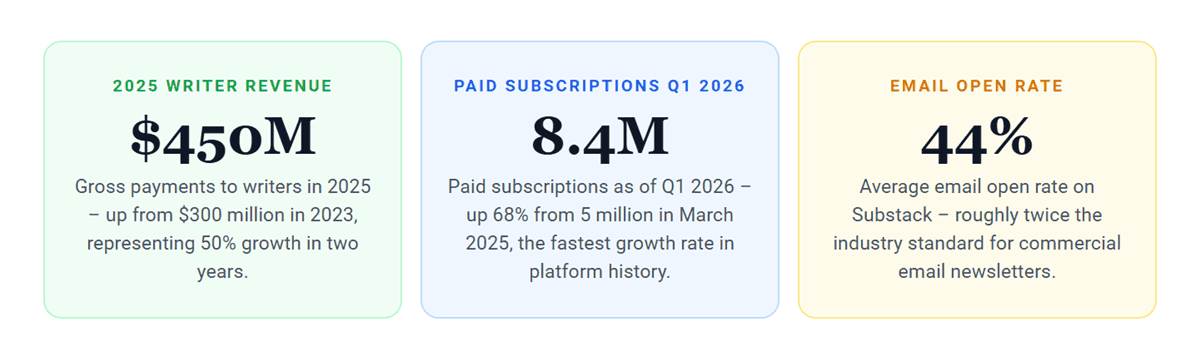
Substack’s paid subscriptions crossed 8.4 million in Q1 2026, up 68% from 5 million a year earlier, though paid subscriptions still represent only about 17% of Substack’s total subscriber base. Most newsletters, even successful ones, monetize a minority of their audience directly.
None of these numbers should discourage you. They should set realistic expectations: meaningful newsletter income is a compounding asset, not a fast flip.
Choosing a Platform That Actually Supports Monetization
Your platform choice determines which monetization paths are available, so pick based on your revenue plan, not just email design features.
| Platform | Best For | Monetization Built In |
| Beehiiv | Creators prioritizing sponsorships and paid tiers from day one | Ad Network, Boosts, native paid subscriptions, 0% platform cut (Scale plan+) |
| Kit | Creators selling digital products or courses to a tagged audience | Native paid newsletters, commerce integrations, creator-focused automations |
| GetResponse | Newsletter plus broader marketing funnel (landing pages, webinars) | Paid newsletter tools bundled with funnel and automation features |
| MailerLite | Beginners wanting a free tier with real automation before monetizing | Free plan up to 1,000 subscribers with automation included |
| Keap | Small businesses combining newsletter with CRM and sales pipeline | Built for lead scoring and sales follow-up alongside email |
| Omnisend | Ecommerce newsletters tied directly to product sales | SMS plus email automation built around cart recovery and product upsells |
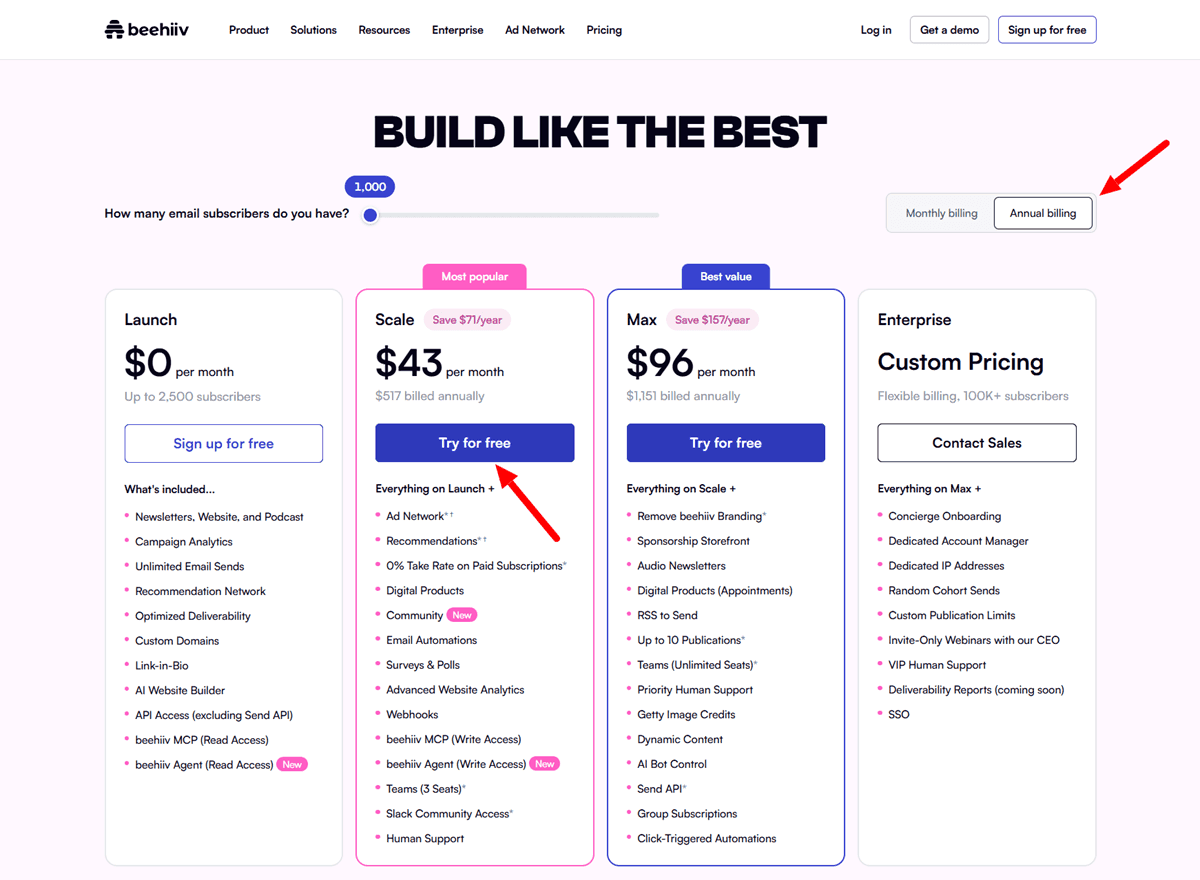
Beehiiv’s pricing is free up to 2,500 subscribers (Launch), then $43 to $290/month (Scale, which enables the Ad Network and paid subscriptions), and $96 to $404/month (Max, which adds a sponsorship storefront and white-labeling). Every monetization feature beyond a basic paid tier is behind the Scale plan.
Substack works differently: it’s free to publish but takes a flat 10% cut of subscription revenue plus 2.9% + $0.30 in Stripe processing, confirmed on Substack’s pricing page. On a $10/month subscriber, you keep about $8.41. That’s simpler to start with, but once you earn more than $1,000/month, a flat-fee platform like Beehiiv or Kit usually costs less than Substack’s percentage cut.
Newsletter Sponsorships and Ad Inventory
Sponsorships remain the most accessible entry point for a newsletter with real but modest reach.
At the smaller end (under 5,000 subscribers), expect flat-rate sponsorship deals between $50 and $250 per placement rather than CPM-based pricing, since flat rates are simpler for both sides to manage at low volume. A 3,000-subscriber newsletter project charging a $25 CPM earns roughly $75 per sponsor slot. Publishing weekly with two sponsor slots, that’s close to $7,800 a year from what’s still a side project.
As you scale past 10,000 subscribers, CPM-based pricing becomes standard: (sponsorship cost ÷ subscriber count) × 1,000. Industry CPMs run $10 to $75 broadly. B2B and finance newsletters are at the top of that range because their readers have higher purchasing authority per person, even with smaller lists than general-interest newsletters.
Cost-per-acquisition (CPA) deals are another common structure, where sponsors pay $10 to $100 per conversion instead of a flat placement fee. These work well once you have data proving your audience converts, but they’re harder to negotiate without that strong track record.
Beehiiv’s Ad Network and Boosts
Beehiiv built two monetization rails most other platforms don’t offer natively, and both are worth understanding even if you’re not on Beehiiv, since they’ve become an industry reference point.
The Ad Network matches publishers with sponsors automatically, so you don’t have to pitch sponsors yourself. Eligibility usually starts around 1,500 active subscribers. Reported CPMs run $7 to $25 depending on niche, with B2B and finance again at the high end. A 10,000-subscriber B2B newsletter sending twice weekly can generate roughly $300 to $800 per month through the Ad Network alone, without direct sales effort beyond opting in.
Boosts is a subscriber-acquisition marketplace: other publications pay you when their referral link brings a new subscriber, typically $1 to $3 per acquired subscriber. It’s a way to earn from your existing audience’s attention even when they’re not converting.
The practical strategy most newsletter operators use is to rely on the Ad Network (or equivalent) for baseline revenue on weeks without a direct sponsor booked. They pursue direct sponsorship sales for premium placements at higher rates once their list is large enough to justify sponsor outreach.
Paid Newsletter Subscriptions
This is where the growth actually is right now, and the mechanics differ meaningfully by platform.
On Beehiiv, the median newsletter turns on a paid tier about 45 days after launch. Conversion from free to paid averages about 0.62%, though this varies by niche. Finance, business, and highly specific professional newsletters convert at notably higher rates than general lifestyle content, since their content directly saves or makes readers money.
On Substack, a 1,000-subscriber free list typically converts 5% to 10% to paid once subscriptions are enabled, a higher rate than Beehiiv’s median. Direct platform comparisons are imperfect since audience composition varies. At $10/month and a 5-10% conversion rate, that’s $500 to $1,000 in monthly recurring revenue from a modest list.
A handful of outlier newsletters earn far beyond typical benchmarks. One estimate puts political newsletter Letters from an American at over $1 million per month from about 2.9 million subscribers. Treat figures like this as a ceiling, not a realistic target. Newsletters earning at that scale usually had an existing public platform (a book, media career, or large following) before launching.
The sustainable approach most successful paid newsletters use is to keep free content strong enough to drive discovery and referrals. They reserve paid content for genuinely deeper value, not just “the same content behind a paywall.”
Affiliate Marketing and Digital Product Upsells
Affiliate marketing remains one of the most durable newsletter income streams because it doesn’t require ad sales skills or a large list to interest sponsors.
The core mechanic is to recommend a product or tool your audience already needs using a unique tracked link and earn a commission when someone purchases through it. This works well in newsletters covering tools, software, or a specific niche where recommendations carry real weight. Readers trust recommendations from newsletters they read regularly more than from random ads.
Disclosure isn’t optional. Any affiliate link needs to be clearly marked as an affiliate or sponsored link to stay compliant with FTC guidelines, regardless of platform.
Digital product upsells, like a paid guide, template, mini-course, or one-time workshop, work well because they don’t require recurring commitment like subscriptions do. A newsletter with 2,000 engaged free subscribers can often generate a meaningful one-time revenue spike from a well-timed product launch, even without enough scale for ongoing sponsorships.
LinkedIn Newsletter Monetization
LinkedIn newsletters work differently from other platforms: LinkedIn doesn’t offer native monetization. The platform has no paid tiers, ad network, or sponsor marketplace.
The value of a LinkedIn newsletter is almost entirely indirect. It builds authority and visibility inside your professional network, which then feeds other revenue: consulting inquiries, speaking opportunities, course sales, or driving readers to a separate email list you own and can monetize. If direct newsletter revenue is the goal, LinkedIn is a distribution and credibility channel that feeds your real newsletter, not a standalone income source.
The Metrics That Actually Determine Newsletter Income
Subscriber growth matters less than these metrics for predicting actual revenue.
Subscriber churn rate measures how many people unsubscribe or go inactive over a specific period. A newsletter growing fast but losing subscribers just as fast isn’t building the asset it seems. Track this monthly, not just total list size.
Subscriber lifetime value (LTV) estimates total revenue a typical subscriber generates over their time on your list, combining subscription revenue, affiliate commissions, and product purchases. This number tells you how much you can spend to acquire a new subscriber and still profit.
Open rate is no longer a reliable standalone metric. Apple’s Mail Privacy Protection inflates recorded opens for many subscribers; sometimes 25% to 40% of a consumer newsletter’s audience routes through iCloud. Click-to-open rate and, more importantly, actual conversion (sponsor link clicks, paid tier signups) are more honest signals of engagement.
Your welcome sequence sets the tone for everything after. A new subscriber’s first few emails determine if they stay engaged long enough to see a monetization offer. An automated welcome sequence that delivers immediate, specific value before any sales pitch consistently outperforms one that pitches immediately.
Building Your Media Kit and Pitching Sponsors
Once you’re ready to sell sponsorships directly rather than relying solely on an automated ad network, a media kit is the single asset that makes outreach credible.
A working media kit needs your subscriber count and growth rate, audience demographics (job titles, industries, or interests relevant to your niche), engagement metrics beyond raw open rate (click rate, reply rate, community engagement), past sponsor examples or testimonials if available, and clear, specific pricing by placement type.
For sponsor outreach, specificity beats volume. A short, personalized pitch to ten sponsors who fit your audience outperforms a generic template sent to a hundred companies. Reference their product, explain why your audience fits, and lead with your strongest engagement number rather than burying it at the bottom.
Custom Ad Networks vs. Direct Sponsor Sales
Beyond a platform’s built-in ad network, some larger newsletters build or join a custom ad network. This is a shared sponsor pool across multiple newsletters in the same niche, pooling audience reach to attract sponsors none of the individual newsletters could land alone.
This works well once a newsletter has plateaued in solo growth but has a specific niche. A single 8,000-subscriber marketing newsletter might struggle to interest a major sponsor. A consortium of five niche marketing newsletters totaling 60,000 combined subscribers, sold as a single ad package, is a different conversation entirely.
The tradeoff is control and revenue share. A custom network typically takes a cut for managing sales and billing across the group, similar to how a platform’s built-in ad network takes its share, in exchange for handling the sales relationship you’d otherwise manage yourself. For newsletters under roughly 20,000 subscribers, direct sponsor relationships or a platform’s native ad network usually make more sense than the overhead of building or joining a custom network.
Frequently Asked Questions
Q: How many subscribers do I need to make money from a newsletter?
A: There’s no hard minimum, but most direct sponsorships become realistic once you cross a few thousand engaged subscribers. Platforms like Beehiiv’s Ad Network typically require around 1,500 active subscribers for eligibility. Affiliate marketing and digital products can generate income at smaller list sizes if the audience is highly targeted.
Q: How do newsletters actually make money?
A: The main paths are sponsorships and advertising (CPM or flat-rate placements), paid subscriptions, affiliate marketing, and digital product sales. Most successful newsletters layer two or three of these rather than relying on just one.
Q: Can you make money with a free newsletter?
A: Yes. Sponsorships, affiliate links, and digital product upsells all work on a free newsletter without ever charging subscribers directly. Many newsletters build a large free audience first specifically to make sponsorship and affiliate income viable before introducing any paid tier.
Q: How much do newsletter sponsors pay?
A: It depends heavily on list size and niche. Smaller newsletters (under 5,000 subscribers) typically see flat rates of $50 to $250 per placement. Larger or niche-specific newsletters, especially B2B and finance, typically use CPM pricing ranging from $10 to $100+ per thousand subscribers.
Q: Is Beehiiv better than Substack for making money?
A: They optimize for different things. Beehiiv charges a flat platform fee, takes 0% of subscription revenue, and includes a built-in ad network. Substack is free to start but takes a 10% cut of subscription revenue. Beehiiv tends to win financially once you’re earning more than roughly $1,000/month; Substack’s built-in discovery network can be worth the 10% cut earlier on, when audience growth matters more than maximizing each dollar.
How to Make Money From a Newsletter: Conclusion
The newsletters making real money in 2026 usually don’t rely on one monetization method alone. They layer a paid tier for their most engaged readers, sponsorships or an ad network for baseline revenue, and affiliate or product income for one-time spikes instead of betting everything on a single channel.
Start with the path that matches where your list is: sponsorships if you have an engaged niche audience without time to build a product, a paid tier if your content is already requested, or affiliate links if you recommend tools you trust. The platform and exact mix matter less than starting and tracking metrics that show what works.
