50 Best-Selling Digital Products in 2026 (Most-Profitable & Easy-to-Create)

What Actually Counts As A Best-Selling Digital Product In 2026
Etsy reported 86.6 million active buyers in the first quarter of 2026, straight from the company’s own SEC filing. That is the audience digital product sellers are competing for, and not every product category gets an equal share of it.
The phrase “best-selling digital products” gets thrown around loosely. A product that sells 10,000 units at $3 and a product that sells 50 units at $400 both qualify, but they are different businesses with different skills required. This guide breaks down why the model works, 50 real product ideas grouped into 7 categories with real price bands, the exact steps to build and launch your first one, and the challenges that trip up almost every new seller.
Selling digital products sits inside the broader creator economy, alongside affiliate marketing, coaching, and paid communities. The category you pick determines your price ceiling, your production time, and how much ongoing support buyers expect from you, so getting this choice right matters more than most guides admit.
Why Sell Digital Products
Before picking a product, it helps to understand why this model works at all, since the reasons shape almost every decision that follows.
1. No Inventory Means the Money Stays with You
A digital file has no printing cost, no shipping label, and no warehouse shelf. Once a template or ebook is built, the cost of selling it again is close to zero, which is why the same $15 template can fund a real income stream without a single unit ever needing to be reordered.
2. One File Scales without Extra Work
A physical product requires more raw materials and labor for each additional unit sold. A digital file does not. The same Notion template that sells to your tenth customer can sell to your tenthousandth customer with no additional production step, which is the entire reason digital product businesses can grow faster than inventory-based ones.
3. Fulfillment Runs Without You
Once a product is listed on a platform connected to a payment processor, a sale at 2 in the afternoon and a sale at 3 in the morning get delivered in the same automatic way. That is what people mean by passive income in this context: the fulfillment is automatic, even though the creation and marketing that got you there were not.
4. Buyers Can Be Anywhere
Deloitte’s research on consumer digital spending trends shows that digital goods and services already account for an estimated 2.7% of the average global shopper’s wallet, with meaningful room to grow as more of the world shops online. A seller in Ohio can sell to a buyer in Manila without a customs form or a shipping quote, thereby opening a market that a physical-product business simply cannot reach at the same cost.
That combination, low production cost per additional sale, no inventory risk, automatic fulfillment, and a global buyer base, is why the digital products market grew to $9.8 billion in 2025 and is projected to reach $18.3 billion by 2033 (Source: HTF Market Insights).
It is also why the space is crowded. A low barrier to entry for you is a low barrier to entry for everyone else, which is exactly why the category and the specificity you choose matter as much as the decision to start at all.
Real 2026 Price Bands For Popular Categories
Pricing data pulled from 2026 Etsy sales trends provides a clearer picture than a generic top-10 list. Here are 6 categories with strong year-on-year growth, along with what buyers are actually paying.
| Category | What Buyers Get | Price Band in 2026 |
| Social media content calendars | Monthly content plans for Instagram, TikTok, and LinkedIn | $9 to $29 |
| Wedding and event planning templates | Budgets, timelines, guest lists, seating charts | $15 to $49 |
| Notion and productivity templates | Project systems, habit trackers, CRM templates | $19 to $79 |
| Resume and CV templates | Industry-specific formats for tech, creative, and healthcare | $9 to $19 |
| Small business financial templates | Profit and loss sheets, invoices, tax trackers | $19 to $49 |
| Teacher and homeschool printables | Lesson planners, worksheets, classroom decor | $4 to $19 |
Notice the pattern across every row. None of these is generic. A “social media template” competes with thousands of listings. A “content calendar for a specific platform combination” answers one search with far less competition, and that is the pattern behind the full breakdown that follows.
50 Best-Selling Digital Products of 2026, Grouped By Category
Use this like a menu, not a checklist. Pick one product that matches a skill you already have, then niche it down until it feels built for one specific buyer instead of everyone.
Category 1: Design Templates And Creative Assets
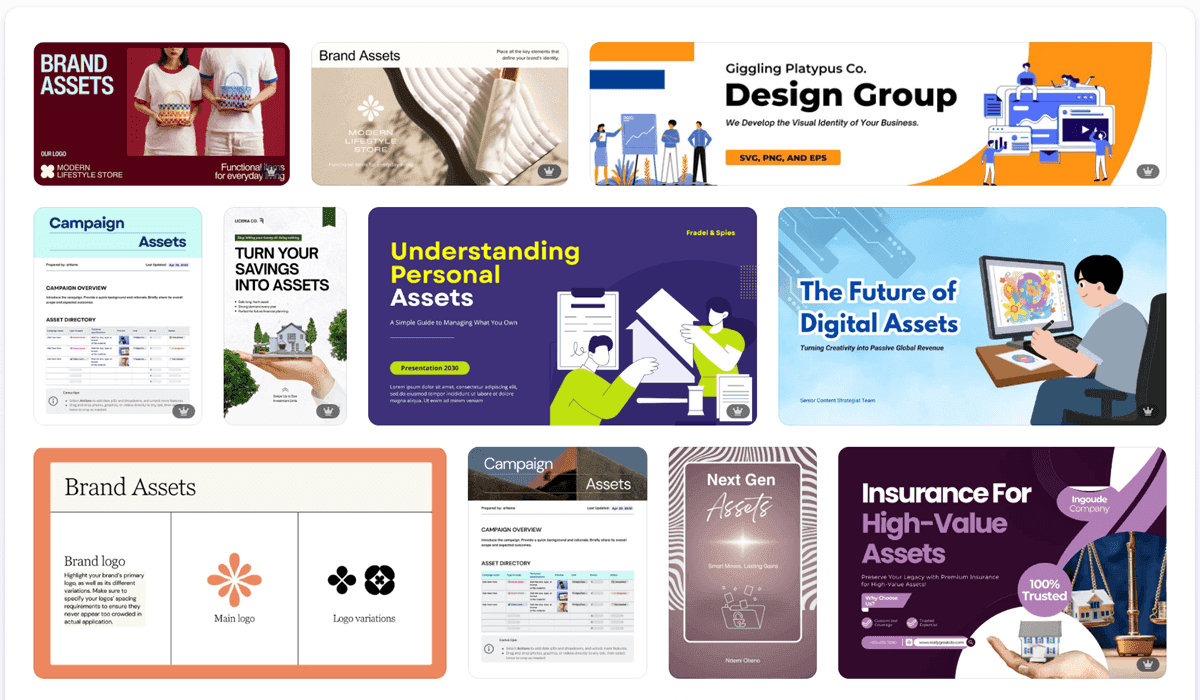
Buyers in this group want something that looks finished the moment they open it. Design skills matter here, but Canva makes professional results reachable without a design degree.
| Product | Who Buys It | Why It Sells | What To Include | Watch Out For |
| Canva Social Media Template Packs | Small business owners, coaches, and creators posting daily | Saves hours of design time every single week | 20 to 50 editable slides, matching covers, and a quick start page | Trends shift fast, so refresh the pack every few months |
| Notion Dashboard and Productivity Templates | Freelancers, project managers, small teams | Turns a blank workspace into a working system in minutes | Pre-built pages, a short setup video, and sample data | Buyers new to Notion may need extra guidance |
| Digital Planners and Journals | Students, busy parents, and goal-focused adults | Helps people stay on track without buying a new notebook every year | Cover options, monthly and weekly layouts, and how-to-use pages | Building enough pages to feel complete takes real time |
| Resume and CV Templates | Job seekers in a specific industry | Looks professional without hiring a designer | Resume, cover letter, and a font pairing guide | Formatting can shift between apps, so test exports carefully |
| Wedding and Event Stationery Suites | Engaged couples, event planners | Looks custom at a fraction of a designer’s price | Invitation, RSVP, details card, and print guidance | Buyers often request small personalized edits |
| Logo and Brand Kit Templates | New small businesses | Delivers a full visual identity without a branding agency budget | Logo variations, color palette, fonts, and social templates | Keep every design genuinely original to avoid disputes |
| Icon, SVG, and Clipart Bundles | Crafters, Cricut users, and other designers | Reusable across dozens of future projects | A themed set, multiple file formats, and a usage guide | Licensing questions confuse buyers, so spell out usage rights clearly |
| Lightroom and Mobile Photo Presets | Photographers, small brands, content creators | Gives a consistent, recognizable photo style in one click | The preset files, before and after examples, and install steps | Results shift with different lighting, so set expectations upfront |
Category 2: Knowledge And Education
This group works if you can explain something clearly. Buyers here are paying to skip the slow, confusing version of learning something on their own.

| Product | Who Buys It | Why It Sells | What To Include | Watch Out For |
| Niche Ebooks | Readers with a specific, narrow problem | Answers a question faster than free, scattered content online | The full guide, a quick reference checklist, and tool links | A vague topic gets lost, and a named audience does not |
| Self-paced Online Courses | People trying to build a defined skill | Feels more guided than learning alone through random videos | Video lessons, worksheets, and a clear lesson outline | Requires real planning so students finish, not just enroll |
| Workshop or Webinar Replay Bundles | Buyers who missed a live session or want to rewatch | Delivers depth without the pressure of a live session | Replay video, slides, a resource list | Content can feel dated if it references a specific month or trend |
| Coaching or Client Workbooks | Coaches selling structure alongside their sessions | Gives a client something tangible between calls | Guided prompts, tracking pages, a progress page | Needs to work standalone, without you explaining every page |
| Swipe Files and Script Packs | Marketers, salespeople, freelancers | Removes the blank page problem for a repeatable task | Templated scripts, example variations, usage notes | Overly generic scripts feel obviously copy-pasted |
| Flashcard Decks and Study Guides | Students, exam takers | Breaks a large subject into manageable review sessions | Digital cards, a summary sheet, a study schedule | Accuracy matters enormously, so fact-check every card |
| Certification Exam Prep Guides | Professionals pursuing a credential | Saves study time before a high-stakes, expensive test | Practice questions, key concept summaries, a timeline | Exams are carried out regularly, so guides need scheduled reviews/updates |
Category 3: Business And Productivity Tools
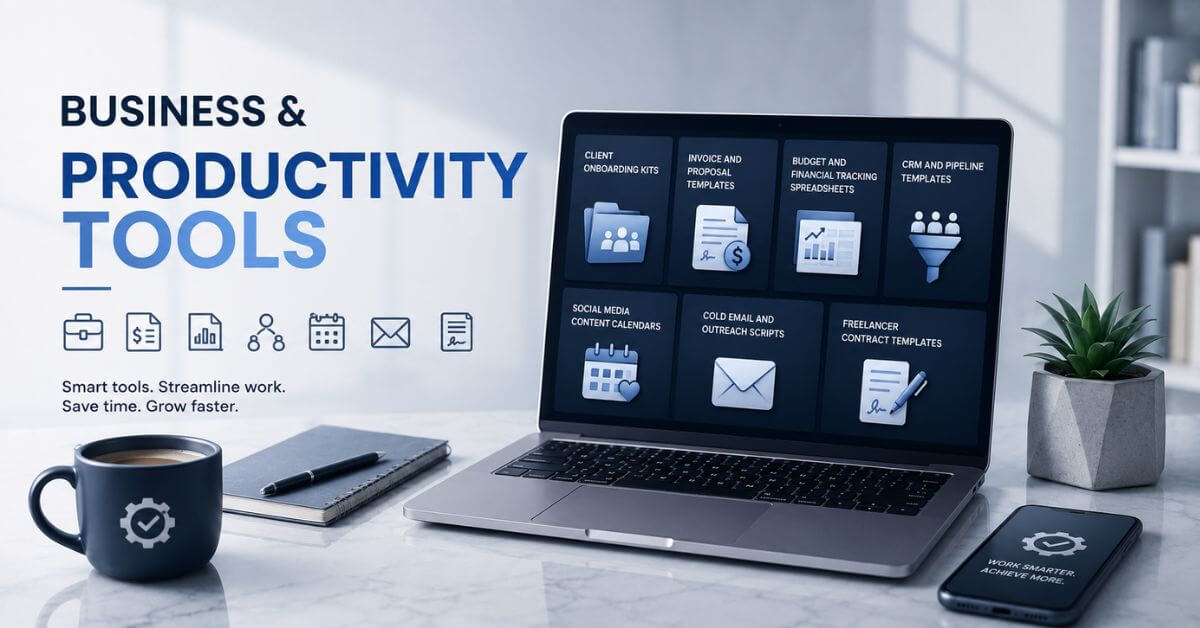
Business buyers pay more than casual buyers for the same underlying design work because the product saves them real operating time, not just a design decision.
| Product | Who Buys It | Why It Sells | What To Include | Watch Out For |
| Client Onboarding Kits | Freelancers, coaches, small agencies | Makes a new client feel like they hired a professional | Welcome packet, intake form, contract template | Needs to work across different niches without heavy edits |
| Invoice and Proposal Templates | Freelancers and small business owners | Looks polished without hiring a designer for paperwork | Editable invoice, proposal template, payment terms page | Currency and tax fields vary by country, so note that clearly |
| Budget and Financial Tracking Spreadsheets | Small business owners, budget-conscious households | Turns messy numbers into a clear, usable picture | Main sheet, sample data, short setup instructions | Formulas can break across spreadsheet apps, so test every version |
| CRM and Pipeline Templates | Freelancers, small sales teams | Organizes leads without a paid software subscription | Pipeline stages, contact tracker, and a follow-up log | Needs to stay simple, since buyers are avoiding complex software |
| Social Media Content Calendars | Small business owners, solo marketers | Removes the daily “what do I post” decision fatigue | Monthly grid, caption prompts, and a posting checklist | Platform features change, so keep formats current |
| Cold Email and Outreach Scripts | Freelancers, agencies, sales professionals | Speeds up outreach without starting from a blank draft | Subject lines, email sequences, follow-up timing | Scripts that sound robotic get ignored, so keep the tone human |
| Freelancer Contract Templates | New freelancers, consultants | Protects both sides without an expensive lawyer | Scope of work, payment terms, cancellation clause | Always include a note that it is a starting point, not legal advice |
Category 4: AI And Tech Products
Buyers here are not looking for code. They are looking for someone who already knows how to use AI tools well and has packaged that into something usable right away.

| Product | Who Buys It | Why It Sells | What To Include | Watch Out For |
| AI Prompt Packs | Marketers, writers, small business owners | Gets better AI output faster than trial and error | A prompt library, real examples, and a short how-to-use guide | Prompts age as AI models update, so plan for revisions |
| Custom GPT or AI Agent Builds | Business owners wanting a specific automated task done | Solves one repeated task without hiring a developer | The configured agent, setup instructions, and example use cases | Needs testing across edge cases before it earns trust |
| AI-Generated Art and Design Packs | Content creators, small brands | Provides usable visuals without a photoshoot or illustrator | A themed image set, usage rights, file formats | Platforms increasingly require AI content disclosure, so check the policy first |
| Automation Workflow Templates | Solopreneurs using tools like Zapier or Make | Removes hours of repetitive manual work | The workflow file, setup steps, and a troubleshooting note | Third-party app updates can break a workflow without warning |
| Chatbot and DM Automation Scripts | Creators and small businesses running social media | Turns casual comments into actual leads or sales | Trigger keywords, message sequences, setup instructions | Overly aggressive automation reads as spammy, so keep it conversational |
| AI Writing Frameworks and Outlines | Bloggers, marketers, course creators | Cuts first draft time significantly without sounding generic | Outline templates, prompt structures, and example outputs | Frameworks without genuine voice guidance produce flat writing |
| No-code App or Website Templates | Founders without a developer on the team | Gets a working product live without custom development | The template file, setup guide, and customization notes | Requires clear documentation, since the buyer has no developer to ask |
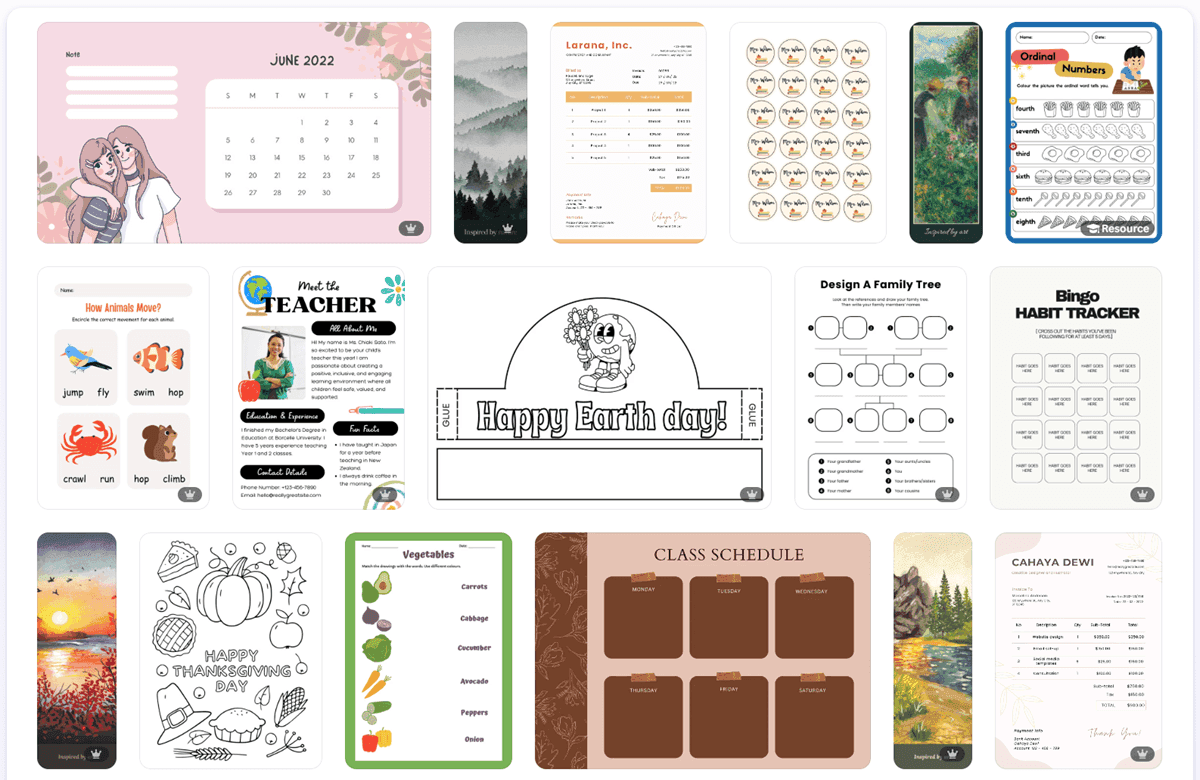
Category 5: Printables And Everyday Life
This is the highest-volume category on Etsy and also the most saturated. Specificity is what separates a listing that sells from one that sits unseen.
| Product | Who Buys It | Why It Sells | What To Include | Watch Out For |
| Meal Plans and Grocery Lists | Busy parents, health-focused buyers | Removes a daily decision that eats up real time | Weekly plan, matching grocery list, and prep tips | Dietary needs vary widely, so a clear niche matters here too |
| Homeschool and Teacher Printables | Parents and educators | Saves hours of lesson prep every week | Worksheets, answer keys, and a simple lesson outline | Curriculum standards differ by region, so state your scope clearly |
| Fitness and Workout Logs | People tracking a specific fitness goal | Makes progress visible instead of guessed at | Weekly log pages, a progress chart, and a goal-setting page | Overly generic logs compete with dozens of near-identical listings |
| Debt Payoff and Savings Trackers | Buyers working through a specific financial goal | Turns an abstract goal into a visual, motivating checklist | Tracker pages, a payoff calculator, and a milestone page | Financial products should avoid specific investment advice |
| Habit and Mood Trackers | Buyers who are building a consistent daily routine | Makes small daily wins visible over time | Monthly grids, a key or legend, and a reflection page | Overly complex trackers get abandoned within a week |
| Kids Activity and Learning Packs | Parents of young children | Fills screen free time with something productive | Activity sheets, an answer key if needed, and printing tips | Age ranges need to be specific, since a 4-year-old and an 8-year-old need different content |
| Holiday and Seasonal Planning Printables | Buyers planning a specific event or season | Solves a time-sensitive planning problem quickly | Checklists, budget trackers, and a timeline page | Seasonal demand means a short selling window each year |
Category 6: Licensing And Resale Products

This category works differently. Instead of creating from scratch, you are buying a license and either reselling it as is or rebranding it, depending on the license type.
| Product | Who Buys It | Why It Sells | What To Include | Watch Out For |
| PLR Ebook Packs | New sellers wanting a fast catalog | Lets a buyer rebrand and sell as their own original work | The base ebook, a license summary, and editing notes | Quality varies wildly across PLR sources, so preview before buying |
| MRR Course Bundles | Sellers wanting inventory without building from scratch | Comes ready to resell with the resale right built in | The course files, the license terms, and a delivery guide | MRR content cannot be edited, so plan your listing around that |
| Done-For-You Social Media Content Packs | Agencies and social media managers | Saves hours of content creation for client accounts | Caption templates, graphics, and a posting schedule | Needs light customization so it does not look identical across clients |
| White Label Lead Magnets | Coaches and course creators building an email list | Provides a ready-made freebie without writing one from scratch | The lead magnet file, a landing page template, and email copy | Rebranding still needs to look intentional, not just a logo swap |
| Resell Rights Planner Bundles | Sellers in the printable and planner niche | Fills a catalog quickly with a proven, tested format | Planner files, the resale license, and usage terms | Same saturation risk as any resold, unedited product |
| PLR Email Swipe Sequences | Email marketers and course creators | Removes the blank page problem for launch sequences | A full sequence, subject line variations, timing notes | Needs a genuine voice edit or it reads like everyone else’s inbox |
| MRR Software and Tool Licenses | Sellers wanting a higher-ticket resale item | Offers real utility without the buyer needing to build software | The tool access, setup instructions, and support expectations | Complex tools need support that you likely cannot provide as a reseller |
Category 7: Membership And Recurring Digital Products
This is where a catalog turns into a business. A single sale ends at checkout; a membership does not.

| Product | Who Buys It | Why It Sells | What To Include | Watch Out For |
| Paid Discord or Skool Community Access | Buyers wanting ongoing support, not a one-time file | Delivers connection and accountability, not just content | Discussion space, a resource library, and regular events | Requires real ongoing presence from you, not a set-and-forget setup |
| Monthly Template Drop Subscriptions | Buyers who use templates regularly | Keeps a catalog fresh without repeat one-time purchases | New templates each month, an archive of past drops | Consistency is the entire value proposition here |
| Private Podcast or Audio Feeds | Buyers wanting exclusive, deeper content | Feels premium and personal compared to public content | Regular audio episodes, an easy feed link | Production needs to stay consistent to justify a recurring fee |
| Resource Vault Subscriptions | Buyers wanting a growing library instead of single files | Access compounds in value, the longer someone stays subscribed | An organized, searchable library, with regular new additions | Needs real organization or the vault feels overwhelming |
| Coaching Call Bundles | Buyers wanting direct access on a schedule | Combines product style delivery with real personal support | Scheduled calls, a recording archive, prep materials | Does not scale the same way a pure digital product does |
| Template of the Month Clubs | Repeat buyers in a specific creative niche | Removes the need to keep searching for new templates | A themed template each month, a request or suggestion channel | Needs a steady creation pipeline to avoid missed months |
| Seasonal Digital Product Bundles | Buyers wanting a complete kit for a specific season or event | Bundles related products at a better combined price | Multiple related files, a discount versus buying separately | Only works well if the individual products already sell on their own |
How To Create And Sell Digital Products Step By Step
Knowing the categories is one thing. Actually shipping a product is another. Here is the process in order.
Step 1: Pick A Niche And A Real Buyer
Do not start with “I want to sell digital products.” Start with one person and one problem. Think “a new Etsy seller who needs Instagram post templates,” not “small business owners.”
Search that exact idea on Etsy or Google. Strong review counts on something similar confirm real demand exists. Reading those reviews tells you exactly what buyers wish existed but do not have yet, which is often more useful than any keyword tool.
Step 2: Build One Product, Not Ten
Pick one format from the tables above and turn it into a small, complete set rather than a single item. A buyer feels like a set is worth the price in a way a single file rarely does.
Build one master design first, then duplicate it and adjust the wording, color, or topic to create 10 to 30 variations that still feel like a matched collection. This is exactly where a tool like Canva earns its place in your workflow, since duplicating and adjusting an existing template takes minutes, not hours. For written products, drafting the first pass with an AI writing tool, then editing it into your own voice with real, specific detail, cuts creation time significantly without producing something generic.
Step 3: Package It So Buyers Feel Confident Before They Open It
Packaging turns a folder of files into something that feels like a real product and directly reduces refund requests, since buyers know exactly what they are getting and how to use it.
A simple package that works for almost anything in the tables above includes a short start-here file explaining what is inside, a plain instructions page, and your actual product files organized into clearly labeled folders. Realistic mockups showing the product in use convert better than a flat, unstyled preview image, since buyers need to picture themselves actually using it before they trust the purchase.
Step 4: Choose Where To Sell It
Etsy charges a $0.20 listing fee, a 6.5 percent transaction fee, and roughly 3 percent plus $0.25 for payment processing, which varies slightly by country (Outfy, 2026). On a $5 product, total fees run close to $0.93, leaving the seller about $4.07. That built-in marketplace search is still why Etsy remains the strongest starting point for a seller with zero existing audience.
Payhip works differently. On the free plan, you pay $0 per month plus a 5% transaction fee, or upgrade to Plus at $29 per month to drop that fee to 2%. It includes a built-in affiliate program on every plan, which is directly relevant to sellers who want their own buyers to help distribute the product.
Gumroad charges a flat 10% plus $0.50 per transaction, with no volume discount at any tier. It works well for creators who already have an audience to drive traffic to, but it doesn’t send organic buyers the way Etsy’s marketplace search does.
Creative Market suits sellers targeting design-conscious buyers willing to pay a premium, in exchange for a higher commission than Etsy or Payhip.
For a beginner testing a new category from the tables above, starting on Etsy to validate demand, then adding Payhip once you have proven bestsellers, gives you the built-in traffic of one platform and the better margins of the other.
⚠️ Important: If you plan to sell worldwide, choose a platform that automatically collects and remits taxes. It can save you countless hours of paperwork, reduce compliance issues, and make international selling less stressful.
Step 5: Price It Based On Value, Not On How Long It Took
A $9 ebook and a $39 ebook usually take the same effort to create, but the higher price attracts a more serious buyer and can generate 4 times the revenue for the same underlying work. Research 2 or 3 comparable listings in your chosen category before setting a price, since buyers already have a reference point for what similar products cost.
Another smart move: bundle your bestsellers together. A single template and a 10-piece bundle require similar preparation time once the individual pieces already exist, but the bundle can sell for 3 to 5 times the price of a single item. Wait until you have sales data before bundling, since guessing at a combination before you know what actually sells wastes design time on a bundle nobody wants.
Step 6: Get Traffic Without Doing Everything At Once
Trying to post on every platform at once is how most new sellers burn out before their first real sale. Pick one main traffic channel, Instagram, Pinterest, or TikTok, and commit to it for 30 days before adding a second.
Set up an email capture from day one, even before your first sale. Beehiiv or Kit both let you collect a buyer’s email with permission, and emailing an existing list about a new product converts at a far higher rate than reaching a cold stranger through search alone.
For Instagram specifically, Outfame helps grow a real, niche-relevant following using Instagram’s official API, and ManyChat turns that audience into buyers by automating a direct message the moment someone comments a keyword on a post.
Common Challenges And How To Beat Them
Even a well-designed digital product runs into predictable problems after launch. Planning for them early beats discovering them the hard way.
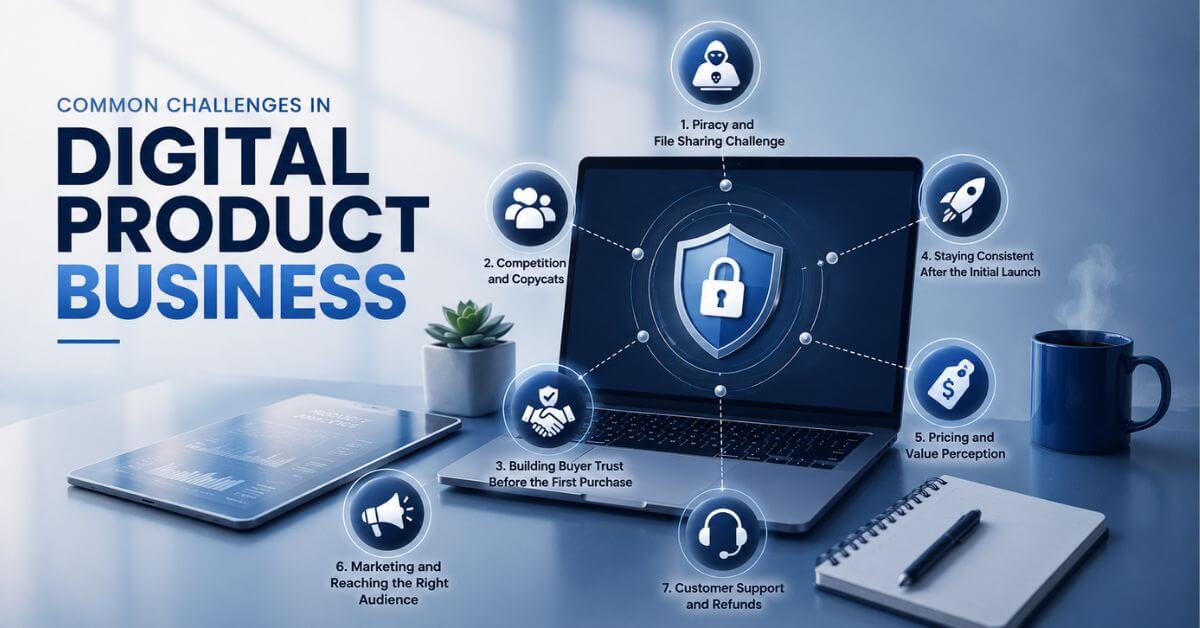
Challenge 1: Piracy And File Sharing
Digital files are easy to copy, and some buyers will take screenshots or redistribute them regardless of what you do. This is a real cost of doing business in this model, not a reason to avoid it.
What actually helps: add a light watermark to your preview images so a screenshot of the preview is not useful on its own, and deliver the final files through a platform that handles secure, tracked delivery rather than a plain public link. Keep the heavy watermarking on previews only. A watermarked final file that the buyer paid for creates a worse experience than the piracy risk it prevents.
Challenge 2: Competition And Copycats
A generic version of anything in the tables above is fighting thousands of nearly identical listings. A specific version, built for one clearly defined buyer, is not.
Niche down further than feels comfortable at first. A “planner” competes with everyone. An “ADHD friendly planner for graduate students” competes with almost no one. Bundling your proven bestsellers into a set also raises the perceived value enough that a buyer chooses you over a cheaper, generic alternative, even when a near-identical single item exists elsewhere for less.
Challenge 3: Building Buyer Trust Before The First Purchase
A buyer cannot touch a digital product before paying for it, which makes trust signals carry more weight than they would for a physical item sitting on a shelf.
Strong, realistic mockups do more work here than almost any other single change, since they let a buyer picture the product in their actual life before committing. Reviews and testimonials matter just as much once you have any, so ask early buyers directly rather than waiting for reviews to appear on their own. A short “how-to-use” page included in the download itself also reduces hesitation about whether buyers can actually use what they bought.
Challenge 4: Staying Consistent After The Initial Launch
The sellers who earn real, ongoing income are the ones who keep publishing new products and refreshing old listings, not the ones who built a catalog once and stopped. Income in this model scales with catalog size and consistency far more than with any single design, which means the biggest risk to your income is not a bad product; it is going quiet after the first one.
Challenge 5: Pricing and Value Perception
Pricing is more than just picking a number; it’s about setting expectations and communicating value. If your price is too low, buyers may assume your product is low quality or generic. If it’s too high, you might scare off first-time buyers. Start with a price that feels fair for the work involved, then raise it after you have some sales and reviews as social proof. Bundling products or offering tiered pricing, like a basic and a premium version, can also help you reach a wider range of buyers and increase perceived value without devaluing your work.
Challenge 6: Marketing and Reaching the Right Audience
Even the best digital product will get lost without visibility. Focus your marketing efforts where your ideal buyers already spend time, such as specific social media groups, niche forums, or email newsletters. Use clear, specific language in your product descriptions and marketing materials so the right people recognize your product is for them. Consistent, helpful content (like tips, demos, or stories about how your product helps) builds trust and draws in buyers who are a great fit.
Challenge 7: Customer Support and Refunds
Providing thoughtful, prompt customer support can turn a hesitant buyer into a loyal fan. Set clear expectations about what your product includes and what kind of support you offer. For digital products, refunds can be tricky, but having a transparent policy, even if it’s a limited one, shows you stand by your offering. Make sure buyers know how to reach you with questions or issues, and then treat every support interaction as an opportunity to build trust and goodwill.
Where To Find What Is Already Selling Before You Build
Guessing at demand wastes design and writing time. Checking first does not.
EverBee is an Etsy-specific research tool that overlays estimated monthly sales, revenue, and conversion rate directly on Etsy search results, built from a database covering more than 200 million listings. You search for a keyword, sort by revenue, and see which specific listings in a category are actually converting before you spend a single hour designing.
One honest limitation worth stating plainly: Etsy does not share official sales data with third-party tools, so EverBee’s numbers are estimates built from visible signals like views, favorites, and listing age, not confirmed sales figures. Independent testing by one reviewer found the estimates track reasonably well directionally, meaning a listing showing far higher estimated revenue than another really was outperforming it, but the exact dollar figures carried a real margin for error, especially on lower-volume listings.
Used correctly, that is exactly the right way to read this kind of tool, for ranking and comparison, not as an accounting statement. The free Hobby plan covers basic research, and the Growth plan costs around $19.99 per month for full sales and revenue data.
AI Digital Products: Real Numbers Instead Of Hype
The AI product category deserves special attention, since it features the most exaggerated income claims of any category in this guide.
Marketing platforms or course sellers often promise $10,000/month within 90 days from AI-written ebooks. One 2026 tracking report comparing 40 or more emerging ebook topics against actual search trends and marketplace data revealed a very different reality: most sellers earn between $0 and $200 in their first 3 months, then climb to $1,000 to $3,500 by month 18 for sellers who take time to understand the system and execute it consistently.
That gap between the marketing promise and the tracked outcome matters. AI tools genuinely lower the cost of producing an ebook or a prompt pack, but they do not eliminate the time required to build an audience or to rank in search. The mechanism has not changed. Only the production step got faster.
The honest takeaway: AI digital products are a legitimate, growing category, but the realistic timeline runs in months, not weeks, and the sellers who succeed treat it like any other digital product business rather than a shortcut.
Turning One-Time Sales Into Recurring Revenue
A single template sale or ebook purchase is a one-time transaction. Recurring income compounds, and 2026 platform data across Whop, Insight Agent, Getly, Printful, and LinkedIn’s own trend analysis all point in the same direction: the creators building the most durable digital-product income are those with at least one recurring offer in their lineup.
A Skool community bundles a discussion feed, a file library, and scheduled events into one paid membership, with plans starting around $9 per month and a 40% lifetime recurring commission through its own affiliate program for every paying host referred.
Instead of selling a single template pack once, members pay monthly for ongoing access to a growing catalog, plus new releases as they are released. That structure requires a more consistent presence than a static listing, but it converts an audience that already trusts your work into a stable revenue base instead of a series of unrelated transactions.
The Tools Powering This Industry In 2026
A handful of tools show up repeatedly across successful digital product businesses, each addressing a specific bottleneck.
ThriveCart Pro Plus
For checkout and course delivery without a monthly fee, ThriveCart Pro Plus charges a one-time $495 fee for lifetime access to its Standard plan, with the Pro Plus upgrade adding affiliate management, automatic sales tax handling, and subscription recovery tools for $295 a year. Every plan carries 0% transaction fees beyond standard Stripe or PayPal processing.
Kit Commerce
For email and list building, Kit offers a free plan that supports up to 10,000 subscribers and lets you sell digital products directly without needing a paid plan. The Creator plan starts at $39/month (or $33/month when billed annually) once a list needs full automation.
Beehiiv
Beehiiv is the top Kit alternative worth comparing directly, since it takes 0% of subscription revenue beyond standard Stripe fees, compared to Kit’s 3.5% plus 30 cents per transaction on digital product sales. Sellers with high transaction volume on their list often save more on beehiiv, while sellers who value Kit’s built-in automation and creator network may find the trade-off worth it.
Outfame
To grow an Instagram audience that drives traffic to a shop, Outfame uses Instagram’s official API to identify and engage real accounts in a chosen niche, without requiring a password or relying on bots.
ManyChat
It turns the social media audience into buyers by automating direct messages triggered by a comment on a post or reel, connecting to Instagram as an official Meta business partner.
SuperProfile
Indian creators looking for an all-in-one dashboard instead of juggling separate tools can use SuperProfile, which bundles a link-in-bio storefront, digital product checkout, and Instagram automation. The platform charges a percentage of each sale, not a fixed monthly fee, and offers paid plans for more advanced needs. This model appeals to those who prefer to manage everything in one place, even if it means paying more per sale than with specialized, individual tools.
FAQ
Q: What are the easiest digital products to make as a complete beginner?
A: Templates and simple printables remain the easiest starting point because the same layout can be reused across an entire set. A beginner-friendly first product is something small and specific, like 10 Instagram post templates or a 20-page checklist pack, built in a free tool like Canva within a single week.
Q: Is selling digital products still worth it in 2026?
A: Yes, but only for sellers who treat it like a real product business rather than a random file upload. Sellers who pick a tight niche, make the product usable within the first 5 minutes of opening it, and show strong, realistic previews continue to find real demand, even in a crowded market.
Q: Where is the best place to sell digital products in 2026?
A: Etsy remains the strongest starting point with no existing audience, since its built-in marketplace search sent traffic to over 86 million active buyers as of early 2026. Payhip and Gumroad depend on the traffic you bring yourself, so they suit sellers who already have some following or an email list.
Q: How do you price a digital product fairly?
A: Price is based on the value the product delivers to the buyer, not on how long it took to create. Comparing 2 or 3 similar listings in your niche gives a realistic starting price, and raising that price once you have reviews and proof that the product works is a normal, expected part of pricing in this model.
Q: What is the difference between PLR and MRR digital products?
A: PLR, or Private Label Rights, lets you edit, rebrand, and resell a product as your own original work. MRR, or Master Resell Rights, lets you resell a product exactly as you received it and pass that same resale right to your buyers, but the content itself cannot be changed.
Q: How much can you realistically earn selling AI-written ebooks in 2026?
A: Tracked seller data shows most beginners earn between $0 and $200 in the first 3 months, climbing to $1,000 to $3,500 by month 18 for sellers who learn the system and stay consistent. This is a significant gap from marketing claims of $10,000 a month within 90 days, which are not supported by tracked outcomes.
Q: How do you protect a digital product from piracy?
A: Complete prevention is not realistic, but watermarking preview images and delivering final files through a platform with secure, tracked delivery meaningfully reduces casual file sharing. Keeping heavy watermarks on previews only, never on the paid file itself, protects your product without punishing the buyer who paid for it.
Q: What is the difference between a one-time digital product and a recurring one?
A: A one-time product, like a template pack or an ebook, ends the revenue relationship at checkout. A recurring product, like a paid community or membership, charges an ongoing fee for continuous access to a growing catalog, which 2026 platform data shows produces more durable income than one-time sales alone.
Q: How do you know if a digital product idea has real demand before building it?
A: Research tools like EverBee overlay estimated sales and revenue directly on Etsy search results, letting a seller compare demand across similar listings before spending time designing. These are estimates rather than confirmed sales figures, so they work best for ranking and comparison, not as an exact revenue guarantee.
Q: What tools do most successful digital product sellers use together?
A: A typical stack combines a storefront like Payhip or Etsy for sales, an email tool like Kit or beehiiv for list building, and a growth or automation tool like Outfame or ManyChat for driving traffic. Sellers scaling into recurring revenue often add a community platform like Skool on top of that stack.
What To Do Next?
Best-selling digital products in 2026 are not defined by a single winning idea. They are defined by matching a specific category to a specific buyer, pricing based on the value delivered, and layering in at least one recurring offer once the one-time products prove themselves.
Pick one product from the 50 ideas above, validate it against real Etsy or Google search demand this week, and build your first version before researching a second idea. Track which listing gets traction first, then build more of exactly that.
If you would rather follow a complete, tested path instead of piecing this together alone, Digital Wealth Academy 3.0 walks you through the entire digital product process from niche to first sale, and the Ultimate Branding Course helps you build a shop people remember and return to.