Master Resell Rights Explained: How MRR Works
Master Resell Rights Explained: What Master Resell Rights (MRR) Actually Means
A single ebook file, sold once by its creator, can end up in 40 different stores under 40 different labels within a month. That is not theft. That is master resell rights doing exactly what it was built to do.
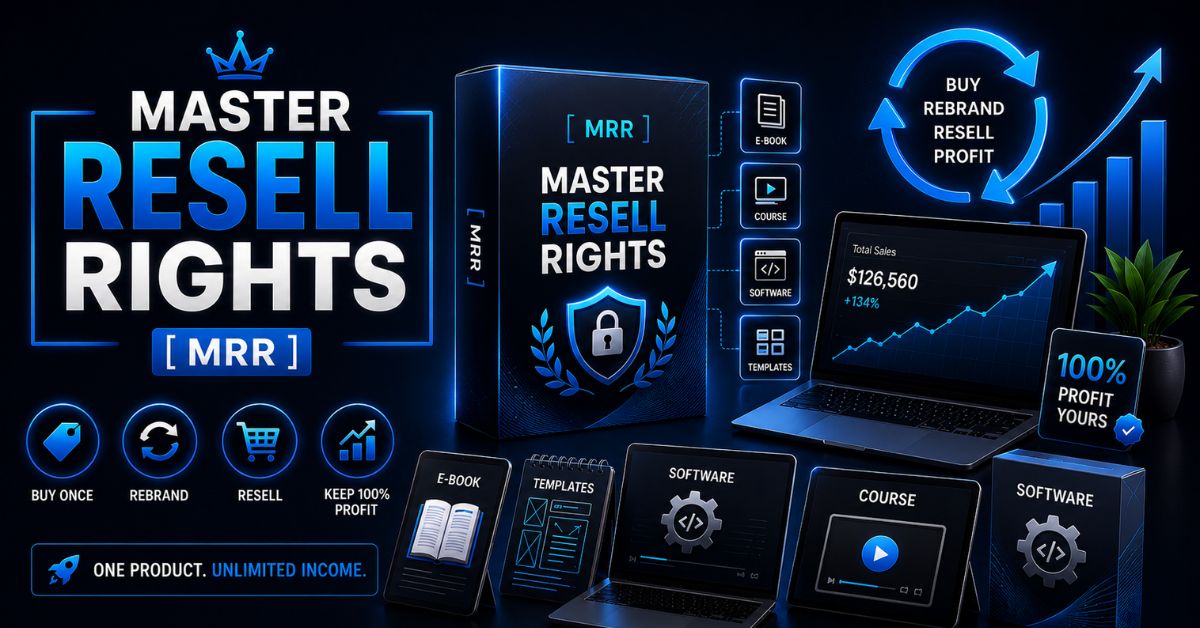
Master resell rights, or MRR, is a license attached to a digital product. It lets you buy the product once, resell it to your own customers, and pass that same reselling right on to them. Your buyer can then resell it to their buyer, and so on down the chain.
This guide explains how MRR works step by step, what separates it from private label rights, where to legitimately source MRR products, and where those same products actually sell. You will also see the one platform rule that most MRR guides skip entirely, and it is the rule most likely to get a new seller’s shop shut down.
By the end, you will know exactly what you are buying before you spend a dollar on your first MRR pack.
How MRR Works (Step-by-Step Guide)
Here is the mechanism, broken into the actual sequence of events.
Step 1: A Creator Makes a Product and Attaches an MRR License
This could be an ebook, a course, a set of templates, or software. The creator writes a license agreement stating that buyers can resell the product and pass on that same resale right.
Step 2: You Buy the Product and Its Resell Rights
You pay a one-time price, often bundled with dozens or hundreds of other MRR products in a single pack. You now own a license to resell that exact file.
Step 3: You List it in Your Own Store, Unedited
This is the part every MRR guide needs to state clearly. MRR products must be sold as is, and you cannot edit or change the content. You can build a product page around it, but the file itself stays untouched.
Step 4: A Customer Buys it From You and Keeps 100% of What You Charged Them, Minus Platform Fees
You set your own price. MRR lets you keep all of the profit from your resale, since you are not paying royalties back to the original creator on each sale. Still, some MRR creators require you not to sell products or bundles at a price below the original price. Be sure to review the rules or license terms before you do.
Step 5: Your Customer Can Now Resell It Too
Because the license is master resell rights, not basic resell rights, that reselling right transfers forward. Your buyer becomes a seller. Their buyer can become a seller. The chain continues as long as each party respects the license terms.
That last step is the entire point of MRR, and it is also the detail most competing articles gloss over. You are not just buying a product. You are buying a piece of a distribution chain that continues to expand after your sale closes.
MRR vs PLR vs Basic Resell Rights: What Each License Actually Allows
These three licenses get confused all the time, and that confusion costs beginners real money when they buy the wrong one for their goals.
| Basic Resell Rights (BRR) | Yes | No | No | No |
| Master Resell Rights (MRR) | Yes | Yes | No | No |
| Private Label Rights (PLR) | Yes | Yes | Yes | Yes |
Basic Resell Rights give you the least freedom. You can sell the product once to your own customer, but they cannot resell it, and you cannot touch the content.
Master Resell Rights sit in the middle. You can sell it, your buyer can resell it, but nobody in that chain can edit the file or claim they made it.
Private Label Rights give you the most freedom. You can rewrite it, redesign it, slap your own name on the cover, and sell it as though you created it from scratch.
Here is the practical difference in plain terms. If you want something you can list in your store within minutes of buying it, MRR is built for that. If you want to build a distinct brand around a product, PLR is the license that lets you actually do it.
Many sellers use both. A core lineup of rebranded PLR products builds the brand identity that earns customers’ trust in the shop, while a wider catalog of unedited MRR products complements the inventory.
Is MRR Actually Legal?
Yes, and this is worth stating plainly because search results are full of vague answers. Master resell rights are a completely legitimate licensing model, and any creator can choose to attach one to their own product.
A photographer can sell their Lightroom presets with MRR attached. A course creator can sell their finished course with a resale license baked in. It is the original creator’s choice to make, and once they make it, buying and reselling that product under those terms is entirely legal.
The real risk is not MRR itself. The real risk is fake MRR. Some sellers advertise resell rights they never actually had permission to offer, which means you would be reselling stolen content without knowing it.
Protect yourself with three checks before you buy from any new source. Search the seller’s name plus reviews before purchasing. Confirm that the same products appear on other established resell rights marketplaces, since legitimate MRR products are almost always available in more than one place. Walk away from any deal that feels like a bargain, like a bundle of 15 million products for a few dollars, since a bundle that size is a signal to verify licensing carefully rather than an automatic red flag on its own.
The Best MRR products to Sell Right Now
Not every MRR category performs the same way. Here is what is actually moving, based on marketplace data and real seller categories.
Online Courses
Course bundles are among the most requested MRR categories because they fit almost any niche. A financial consultant can add a basic literacy course to their catalog. A craft store can add a beginner crochet course. We highly recommend previewing the content before listing it, since some course bundles ship 100 or more titles for a few dollars, and quality varies widely inside a single pack.
Ebooks
Ebooks remain one of the highest-volume MRR categories, and thousands are available on resell-rights marketplaces at any given time. Because you cannot edit the file, the cover and author name stay as they came. Many sellers solve this by listing MRR ebooks under an “other authors” or “curated picks” section of their store, which keeps their own branded products front and center.
Digital Planners and Organizers
Digital planners, trackers, and journals are consistently one of the most searched digital product categories. MRR planner packs typically sell for around $10 for a full library of templates when bought at the source, then get relisted individually for meaningfully more.
Social Media Content Packs
This category includes editable templates, made-for-you caption packs, and faceless content bundles built for creators who do not want to appear on camera. These sell well specifically because growing a following requires constant posting, and MRR content packs let creators supplement their own posts without doubling their workload.
Software and AI Prompt Packs
MRR software tends to be simple, low-maintenance tools like survey builders or basic design apps, since resellers cannot patch or support anything complex. AI prompt packs are the newest, fast-growing category, with some bundles exceeding 100,000 prompts, split into smaller, resellable chunks. Buyers are not paying for the prompts themselves so much as for the time saved by skipping the trial-and-error of writing them from scratch.
Where to Buy Legitimate MRR Products
This is the step most guides rush through, and it is the one that determines whether your entire catalog is trustworthy on day one.
IDPLR is one of the longest-running resell-rights marketplaces, operating on a membership model since 2008. The platform currently gives members access to more than 12,000 packages, which expand into over 45,000 individual products once every included file is counted, spanning ebooks, software, video, templates, and graphics under PLR, MRR, and basic resell rights licenses (IDPLR data, cited in WayToChanges review, 2026).
The free membership tier includes access to more than 200 products at no cost, making it feasible to preview the platform’s quality before committing to a paid tier. That matters more than it sounds. Quality inside membership-style MRR libraries varies from file to file, so testing before you build your listings around a specific source protects you from stocking a shop with content nobody wants.
One honest limitation worth naming: membership libraries like this prioritize volume and variety over tight curation. Not every file inside a 12,000-product library will be worth reselling. Treat it the way a reseller treats any wholesale inventory: sort through it, test what performs, and drop what does not sell.
Where to Actually Sell MRR Products
Owning the right to resell a product means nothing without a storefront that can process the sale and deliver the file.
Payhip is built specifically for this. On its free plan, you pay $0 per month plus a 5% transaction fee, or upgrade to the Plus plan at $29 per month to drop that fee to 2%. It includes a built-in affiliate program on every plan, including the free plan, which is directly relevant to MRR sellers who want their own buyers to spread the word.
Payhip also automatically collects and remits EU and UK VAT on digital sales, removing a genuine compliance headache that catches new sellers off guard when they start selling internationally.
Gumroad is another common choice, charging a flat 10% plus $0.50 per transaction, with no volume discount available at any tier. It works, but it costs more per sale as your MRR catalog scales.
Shopify suits sellers who eventually want to combine MRR digital downloads with physical products or a fully custom storefront, starting at around $29 a month regardless of sales volume.
For a beginner stocking a shop primarily with MRR and PLR products, Payhip is the more practical starting point, since its lower fee structure and built-in affiliate tools matter more once your catalog includes dozens of low-priced items rather than a single flagship product.
The Etsy Problem Nobody Explains Clearly
Here is the gap in almost every MRR guide currently ranking, and it is the single most important trust signal in this entire article.
Etsy positions itself as a marketplace for handmade and unique goods. Its own seller policy states plainly that everything listed as handmade must be made or designed by the seller, and reselling is prohibited in that category.
That creates a direct conflict with unedited MRR products. Selling an MRR file exactly as you received it does not meet Etsy’s handmade standard, and sellers who list MRR products with only a font or color swap risk having their shop suspended for duplicate or non-original content.
The workaround many sellers use is significant: real editing before listing. Etsy does allow PLR and MRR sourced content once it has been meaningfully redesigned, not just retouched. One licensing FAQ puts the bar plainly: simple font or color changes are not enough, and sellers need to redesign layouts, add or modify content, and brand the product uniquely before it qualifies.
Here is the honest tradeoff. MRR products, by license definition, cannot be edited at all. That makes true MRR products a poor fit for Etsy specifically. PLR products can be edited enough to satisfy Etsy’s policy, which is why experienced sellers often reserve pure MRR for Payhip, Gumroad, or their own store, and save Etsy listings for PLR products they have substantially rebranded.
Skipping this distinction is exactly how new sellers get their Etsy shop flagged in the first month.
How to Actually Make Money with MRR Products
Buying the rights is the easy part. Turning a catalog into real income takes a specific approach.
Diversify Instead of Stacking One Bundle
A single MRR pack of 50 near-identical planner templates does not perform as well as a smaller catalog spanning several product types. Buyers browsing a shop want to see a range, the same way a clothing store with three drab color options loses to one with real variety.
Add Branding to the Product Page, Even When You Cannot Touch the File
You cannot edit an MRR file itself, but nothing stops you from building a professional product page around it. Canva is the tool most resellers use for this, since its templates make it fast to design branded mockups, cover images, and listing graphics that make an unedited MRR product look like part of a cohesive, professional catalog.
Write a Real Product Description
Many MRR sellers copy the vague description that came with the file and stop there. A description that names the specific person the product helps and the specific problem it solves converts better than a generic one every time.
Treat Pricing as a Lever, not a Guess
Your cost to fulfill sale number one and sale number 500 is nearly identical, so price for the value delivered rather than what feels safe as a beginner. A bundle of 5 related MRR products sold together at a discount to their combined individual price consistently raises average order value without any extra work.
Turning MRR Sales into Recurring Income
A single MRR sale ends the moment the file downloads. Recurring income compounds instead, and it is the layer most MRR sellers skip entirely.
Email marketing software beehiiv lets you capture the email address of every MRR buyer, with their permission, and takes 0% of your subscription revenue beyond standard Stripe processing fees. Once someone has bought one MRR product from you, emailing them about a second bundle converts at a much higher rate than reaching a cold stranger, because they have already trusted you with a purchase.
A growing number of MRR sellers are also moving their catalogs into a paid community rather than selling one bundle at a time. A Skool community wraps a discussion feed, a file library, and scheduled events into one paid membership, with plans starting at $9 per month and a $40 recurring commission through its own affiliate program for every paying host referred. Instead of selling a single MRR ebook once, members pay monthly for ongoing access to your entire growing catalog.
That model requires more ongoing presence than a static listing does. It also converts a one-time transaction into a relationship, which is the actual difference between a side sale and a business.
Marketing MRR products without a following
MRR products still need traffic. Nobody buys what they never see.
ManyChat connects to Instagram as an official Meta business partner and lets creators automate direct messages triggered by a comment on a post or Reel. A viewer comments a specified keyword on their posts or reels, and an automated message delivers a link or a freebie straight into their inbox, cutting the number of people who drop off between seeing content and actually buying.
Reported open rates on these automated DMs run 70 to 90%, compared with 15 to 25% for typical email. That gap exists because people check a DM notification the moment it lands, something they rarely do with an inbox full of newsletters.
One honest limitation: automation amplifies attention that already exists. It cannot create an audience out of nothing, so posting content consistently still has to come first.
Common mistakes that sink an MRR business
A handful of mistakes account for most failed MRR shops, and each of them is avoidable.
Buying from Unverified Sellers
If a source cannot show you where else the product is legitimately sold, or dodges questions about the original license, walk away before you build a catalog around stolen content.
Reselling Unedited MRR Products on Etsy
As covered above, this violates Etsy’s own handmade policy and risks shop suspension. Save true MRR for Payhip, Gumroad, or your own storefront.
Copying the Seller’s Original Description Word for Word
A lazy listing signals a lazy shop. Buyers can tell the difference between a seller who understands what they are selling and one who is just relisting a folder.
Never Updating the Catalog
MRR content ages. A product built around 2023 trends looks dated by 2026. Reviewing and rotating older listings keeps a shop looking active instead of abandoned.
Ignoring the License Terms
Some MRR licenses set a minimum resale price or restrict which platforms you can sell on. Skipping the fine print is how sellers accidentally breach a contract they never actually read.
Your 7-Day Plan to Start an MRR Business
Day 1: Research Before Buying
Don’t just settle for the first MRR marketplace you find. Take the time to browse several options and really compare what’s inside. Look beyond the price tag; pay attention to the quality of the products you’ll actually be allowed to resell.
It’s tempting to go for the cheapest bundle, but a catalog full of low-quality files won’t do you (or your customers) any favors. Before you buy, dig into reviews of the source itself, not just the products, so you know you’re dealing with a reputable seller. This bit of homework up front will save you from the headache of sorting through junk later.
Day 2 & Day 3: Buy Your First Pack and Audit It
Open every file in your new MRR bundle, even the ones that don’t look promising at first glance. Take a few minutes to actually flip through each product and ask yourself: would someone pay for this as it is?
Set aside anything that feels low-quality, outdated, or irrelevant to your audience, and focus on the gems that could stand on their own in your store. Nearly every bundle will have a few duds mixed in with genuinely valuable products, so don’t be discouraged if you end up passing on half the pack. That’s normal. What matters is that you’re curating a catalog you feel good about selling, not just uploading everything blindly.
Day 4: Set Up Your Storefront
Create a Payhip account if you plan to sell MRR products as is, since its fee structure and affiliate tools suit a growing catalog better than the alternatives.
You don’t need to worry about complicated setup or hidden costs. Just upload your products and start selling. Plus, with every sale, you’ll have the option to reward buyers who spread the word, helping you build momentum even if you’re just getting started.
Day 5: Write Real Product Pages
Use Canva to design eye-catching, branded mockups that make your digital products really stand out, even if you can’t edit the MRR product files themselves. Put extra care into writing descriptions that clearly explain who your product is for and what problem it solves. When it comes to pricing, think beyond just covering your costs or playing it safe as a beginner. Price your products based on the real value they deliver to buyers, so you’re rewarded for the work you put in, and customers feel confident about what they’re getting.
Day 6: Set Up Your Email Capture
Set up beehiiv so every time someone makes a purchase, you can invite them to join your email list (with their permission, of course). This way, you’re not just making a one-time sale but building an audience of people who are already interested in what you offer. When you have a new product or bundle to share, you’ll have a warm list of buyers ready to hear about your next launch.
Day 7: Publish and Promote
List your first 3 to 5 products, post about them on the social platform where you already have some presence, and track which listing gets the most attention.
If you want a complete, structured system instead of piecing this together product by product, our own Digital Wealth Academy 3.0 walks through sourcing, pricing, and monetizing exactly this kind of digital product catalog from day one.
And once your MRR shop needs a real identity that buyers remember, the Ultimate Branding Course covers how to build that without touching a single license-restricted file.
FAQ
Q: What is the difference between master resell rights and private label rights?
A: Master resell rights let you resell a product exactly as you received it and pass that same resale right to your buyers, but you cannot edit the content or claim you created it. Private label rights allow you to rewrite, rebrand, and resell the product as your own original work, which requires more effort but yields a more differentiated asset.
Q: Is it legal to buy and resell MRR digital products?
A: Yes, master resell rights are a legitimate licensing model that any creator can choose to attach to their own product. The legal risk comes from fake resell rights sold by unauthorized sellers, not from the MRR license itself, which is why verifying a source before buying matters.
Q: Can you sell MRR products on Etsy?
A: Technically, no, not unedited. Etsy’s handmade policy prohibits reselling products that were not made or designed by the seller, and MRR products, by license definition, cannot be edited. PLR products that have been substantially redesigned can meet Etsy’s standard, but true MRR products are a better fit for Payhip, Gumroad, or your own storefront.
Q: How much money can you actually make reselling MRR products?
A: You keep 100% of what you charge on each resale, minus platform fees, since you already paid the license cost upfront rather than owing royalties per sale. Real income depends on catalog diversity, product page quality, and traffic, the same variables that determine income for any digital product business.
Q: Where can you find legitimate MRR products to resell?
A: Established resell rights marketplaces that have operated for years, list clear licensing terms per product, and offer a free tier to preview quality are the safest starting point. Buying directly from individual creators who explicitly offer MRR is another option, though it takes more time to source.
Q: What kinds of digital products come with master resell rights?
A: Online courses, ebooks, digital planners, social media content packs, software, and AI prompt bundles are the most common MRR categories. Course bundles and planner packs currently see the highest resale demand because they solve problems buyers constantly search for.
Q: Do you need permission to pass resale rights to your own customers with MRR?
A: No additional permission is required beyond the original MRR license itself, since passing on the resale right is the specific feature that separates master resell rights from basic resell rights. Always confirm that the license explicitly states master resell rights, not just resell rights, before assuming your buyers can resell.
Q: Can you combine MRR and PLR products in the same store?
A: Yes, and many established sellers do exactly this. A core lineup of rebranded PLR products builds a distinct brand identity that earns customer trust, while a broader catalog of MRR products fills out the store’s range without the extra editing work every item would otherwise require.
What to Do Next?
Master resell rights are not a shortcut around building a real digital product business. They are a legitimate way to quickly stock a catalog, provided you understand exactly what the license does and does not allow.
Pick one legitimate source, buy a small pack, and sort through it honestly before you list anything. Build your product pages with real descriptions and real branding, even on files you cannot edit. Then add the layer most sellers skip, an owned email list, and at least one recurring income stream, so a single MRR sale is not the end of that customer relationship.
If you would rather follow a complete, tested path instead of piecing this together alone, Digital Wealth Academy 3.0 walks through the entire digital product process from sourcing to first sale, and the Ultimate Branding Course helps you build a store people remember and return to.