
Is Faceless YouTube Automation Still Worth Starting in 2026?
What Faceless YouTube Automation Actually Means
In January 2026, YouTube removed 16 channels from its Partner Program in a single enforcement wave. Combined, those channels had racked up 4.7 billion lifetime views and an estimated 10 million dollars a year in ad revenue, gone in one policy sweep.
That single event tells you more about faceless YouTube automation in 2026 than any income screenshot does.
Faceless YouTube automation is a content model where a creator builds and runs a YouTube channel without ever appearing on camera, using AI tools, outsourced freelancers, or a mix of both to handle scripting, voiceover, video assembly, and publishing. The name is a little misleading. It does not mean a robot runs the whole thing while you sleep. It means you turn video production into a repeatable system and hand off or automate each step, while you keep the strategy and quality control.
This article covers a full faceless YouTube automation tutorial on how the model actually works, whether the automation courses selling it are worth the money, YouTube’s real 2026 monetization rules, the policy update that just wiped out 16 channels, the tools that genuinely save time, and a realistic income range based on what actually gets reported, not promised.
Is Faceless YouTube Automation A Scam?
This question deserves a straight answer before anything else, because the search results for this topic are full of courses trying to sell you the answer.
Faceless channels themselves are not a scam. Thousands of legitimate faceless channels run on YouTube today across finance, true crime, history, and explainer niches, and plenty of them are fully monetized and compliant with YouTube’s policies. In short, the Faceless YT automation business model works.
What deserves real skepticism is the automation course industry built around it. Here is the honest logic worth sitting with: if someone genuinely has a repeatable system that reliably turns a new channel into $50,000 a month, the more profitable move is to build 5 more channels with that system, not spend months producing a course to sell strangers for $1,000.
Course sellers in this space commonly frame their business as “giving back,” which sounds generous right up until you notice their own income breakdown usually shows the course itself generating the majority of their revenue, not their channels. That does not mean every course is worthless. Some genuinely teach a real workflow. It means the income claims used to sell those courses are almost always self-reported, unaudited, and impossible for you to verify, so they should never be the reason you buy.
Everything a legitimate course teaches about niche selection, scripting, retention, and monetization already exists in free form across YouTube itself, because creators who actually succeed at this have every incentive to show their process publicly to grow their own audience. There are no real secrets here. Treat any framing that suggests otherwise as a sales tactic, not a fact.
YouTube Monetization Requirements For 2026 [100% Verified]
Skip past the recycled checklist you have seen everywhere and look at what YouTube’s own documentation actually says, since several third-party guides get the tiers wrong.
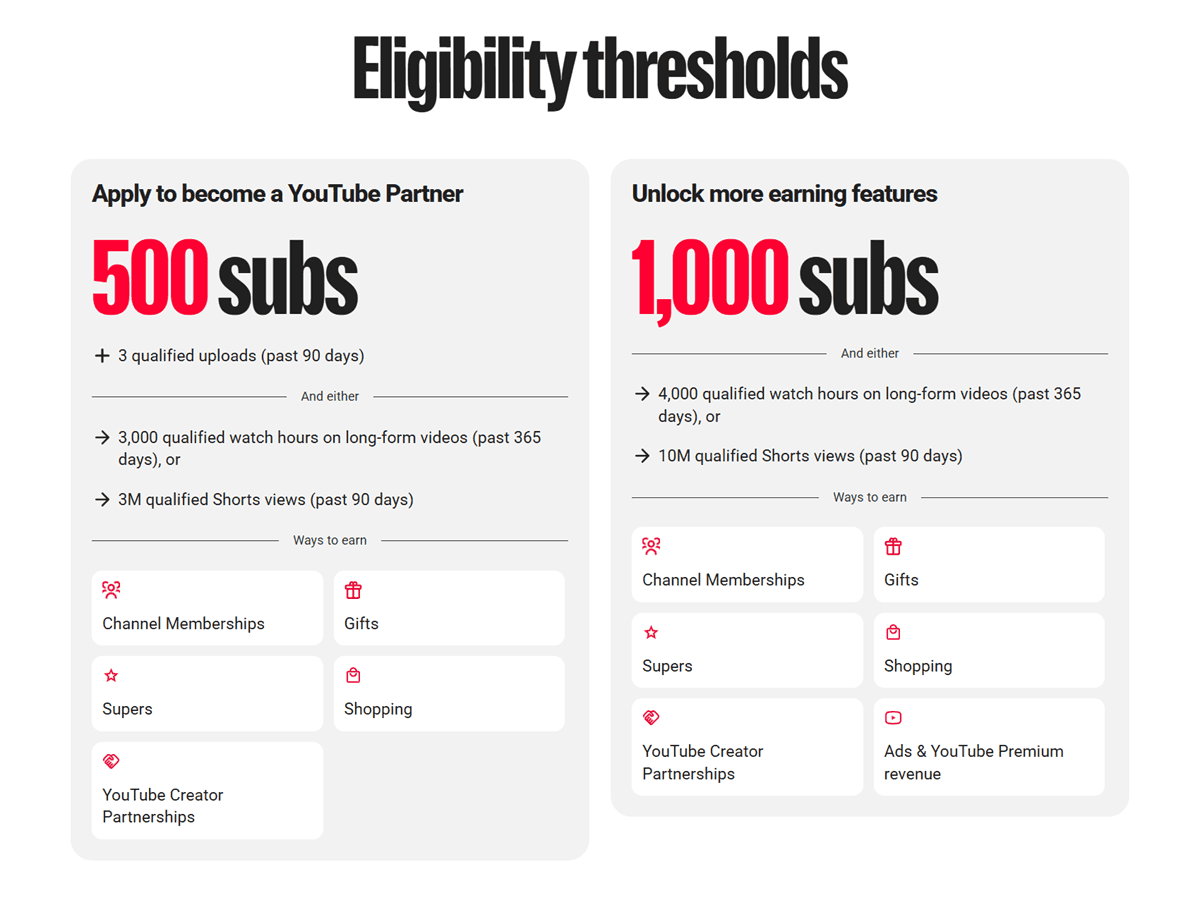
YouTube runs 2 eligibility tiers for the Partner Program, confirmed directly on YouTube’s official creator page:
| Eligibility Tiers | Subscribers Count Requirement | Watch Time Needed | Monetization Options |
| Tier 1: Fan Funding | 500 subscribers, 3 qualified public uploads in the past 90 days | 3,000 public watch hours in 12 months, or 3 million public Shorts views in the past 90 days | Super Thanks, Super Chat, channel memberships, Shopping |
| Tier 2: Full Monetization | 1,000 subscribers | 4,000 public watch hours in 12 months, or 10 million public Shorts views in the past 90 days | Ad revenue, watch page ads, Shorts feed ads, Premium revenue |
Both tiers also require 2-step verification on your Google account, no active Community Guidelines strikes, and compliance with YouTube’s monetization policies.
One detail most guides skip: watch hours earned from Shorts views inside the Shorts feed do not count toward the 4,000-hour long-form threshold. The 2 paths are genuinely separate tracks, and mixing formats does not combine progress between them.
The mechanism behind why Shorts became a second path matters here. Shorts can get a channel to 10 million views faster than 4,000 watch hours accumulate through long-form content, especially in high-engagement niches like story narration or quick facts. But Shorts ad revenue is pooled across the entire Shorts feed and split based on view share, so per-view earnings run dramatically lower than long-form ad revenue. Many creators use Shorts specifically to qualify fast, then build a long-form library once monetized, since that is where the real per-view income lives.
The Policy Update Every Automation Guide Should Mention, And Most Do Not
On July 15, 2025, YouTube renamed its “repetitious content” policy to “inauthentic content,” and the update was not cosmetic (Source: YouTube Help Center, YouTube Channel Monetization Policies).
The policy targets content that looks mass-produced: videos built from an identical template with only superficial differences, image slideshows with no real narration, or scripts read verbatim from an external source with no added commentary. Critically, this policy applies at the channel level. If enough of your uploads qualify as inauthentic, YouTube can remove monetization from your entire channel, not just the individual videos in question.
The January 2026 enforcement wave mentioned earlier was the first large-scale test of that policy, and it targeted exactly the kind of low-effort automation that some courses openly teach: stock footage stitched together with a single AI voiceover and zero point of view.
Here is the part that actually matters for anyone building a channel today. YouTube has stated plainly that AI tools are not banned and remain fully compatible with monetization, as long as a human is driving the creative decisions in the final product. Using AI to draft a script, generate a voiceover, or assemble stock footage is fine. Uploading that output with zero editing, zero original commentary, and an identical structure video after video is the specific pattern that gets flagged.
The trust signal worth being direct about: the durable version of faceless YouTube automation in 2026 is semi-automated, not fully automated. A human still needs to review every script for accuracy, add a real point of view, and vary the structure enough that an average viewer can tell one video from the next. Channels that skip that step are building on borrowed time, regardless of how polished the AI output looks on day one.
Choosing A Profitable Niche And Channel Type
Niche selection determines your RPM ceiling before you ever publish a single video, which makes it the single most important decision in the entire process.
Finance, investing, tech reviews, and business content typically carry the highest RPM, since advertisers pay a premium to reach an audience actively researching purchases or investment decisions. Story narration, facts, and general entertainment content draw large audiences but usually earn a lower RPM, which means these niches need higher volume to produce comparable income.
A practical validation process beats guessing every time. Search YouTube for your niche keywords and check the first 20 results. Count how many are faceless channels, since a field dominated by personality-driven creators is harder to break into. Check the upload frequency of the top channels, since matching a daily posting niche with a weekly upload schedule puts you at a structural disadvantage from day one.
Mixing content types protects against both boredom and algorithm risk. A rough 70% evergreen, 30% trending split gives you steady long-term search traffic from how-to guides and explainers, while trending topics catch short-term spikes in interest without making your whole channel dependent on news cycles.
Researching Keywords And Video Ideas That Actually Get Clicked
Guessing at video topics wastes production time on ideas nobody is searching for.
vidIQ and TubeBuddy both overlay search volume, competition, and keyword suggestions directly inside YouTube, which turns idea generation into a research process instead of a guessing game. TubeBuddy’s A/B thumbnail testing feature specifically lets you run 2 thumbnail versions against real traffic and keep the one that actually performs, rather than guessing which design looks better.
For broader keyword and content research beyond YouTube itself, Semrush’s Keyword Magic Tool draws from a database of more than 27 billion keywords and filters by search intent and difficulty, which helps validate whether a topic has real, sustained search demand across Google as well as YouTube, not just a temporary spike in the app.
Once you have validated topics, generating video ideas at volume becomes a repeatable weekly task rather than a creative crisis. Spend a focused hour or 2 each week pulling ideas from competitor comment sections, since viewer questions and complaints in someone else’s comments reveal exactly what your own script should address.
Writing Scripts That Retain Viewers Without Sounding Robotic
Quality over quantity is not a platitude here; it is the literal mechanism behind YouTube’s recommendation system. The algorithm rewards watch time, not upload frequency, and a channel posting daily with poor retention will consistently lose recommendation reach to a channel posting twice a week with videos people actually finish.
Retention lives or dies in the first 30 seconds. If a script does not earn attention immediately, no amount of mid-video pacing saves it. Pattern interrupts, changing the visual or tone every 5 to 7 seconds, keep a faceless video from feeling like a static slideshow with narration layered on top.
AI script generators genuinely speed up the first draft. The mistake is stopping there. A script that reads like unedited AI output, generic phrasing, no specific examples, no clear point of view, is exactly the pattern that both bores viewers and risks tripping the inauthentic content policy covered earlier. The fix is the same for both problems: add your own research, your own examples, and a clear opinion the AI could not have generated on its own.
Producing Faceless Videos: Two Real Workflows
Faceless production generally splits into 2 approaches, and knowing which one fits your resources avoids months of wasted trial and error.
1. All-in-one Workflow
This approach uses a single platform to move from script to finished video in one workflow. Pictory and InVideo both turn a script or article into a finished video using stock footage, auto-generated captions, and AI voiceover in one pass, which is the fastest route to a publishable video for a solo creator without an editing background. VidAI focuses specifically on short-form and faceless YouTube content, generating videos up to 10 minutes with AI voices and visuals from a script input.
2. Phased Workflow
It breaks the same pipeline into separate stages: script, voiceover, visuals, editing, so that each stage can be refined or outsourced independently. This method takes longer per video but gives more control over quality, which matters more as your channel grows and small inconsistencies become more visible to a larger audience.
Most successful operators start with the all-in-one method to validate a niche cheaply, then shift toward the one-by-one method, or outsource specific stages to freelancers, once a channel proves it has real traction worth investing more production time into.
TubeMagic sits in the scripting and optimization layer of this workflow rather than full video assembly, generating scripts, titles, descriptions, and thumbnail concepts from a topic. It is worth noting plainly that TubeMagic is owned by Matt Par, the creator behind one of the best-known faceless YouTube automation courses, so treat any of his platform’s own marketing claims about your future results with the same skepticism outlined earlier in this guide. The tool itself is a straightforward scripting and metadata utility; evaluate it on that basis rather than on income promises attached to its creator’s brand.
YouTube SEO Titles, Thumbnails, And The Algorithm
A well-produced video with a weak thumbnail loses to a mediocre video with a compelling one, because the thumbnail and title are the entire sales pitch before a single second of watch time happens.
High-contrast colors, bold, readable text, and a clear curiosity gap consistently outperform cluttered or vague designs. TubeBuddy and vidIQ both support thumbnail A/B testing, which removes guesswork by showing you which version actually earns more clicks from real impressions rather than which one you personally prefer.
Titles need to be specific and benefit-driven rather than clever. A title naming the exact outcome or number a viewer will get consistently outperforms a vague, mysterious one, since search and suggested placement both reward titles that match how people actually type their queries.
Building A Workflow Dashboard Without Hiring A Developer
Once a channel scales past a handful of videos a month, tracking scripts, statuses, freelancer assignments, and publishing dates in scattered spreadsheets becomes its own full-time job.
Emergent is an AI app builder that turns a plain language description into a working internal tool, useful here for building a simple content tracker or production dashboard, a place to log video ideas, script status, assigned editor, and publish date, without hiring a developer or learning to code. For a solo operator managing 2 or 3 channels, a basic internal dashboard built this way replaces a tangle of spreadsheets and Slack messages with one central view of what stage every video is actually in.
This is not a requirement for a beginner running one channel manually. It becomes genuinely useful once you are coordinating freelancers across multiple channels and need a single source of truth for where every video stands.
Turning Views Into Diversified Income
AdSense revenue alone is rarely the whole story for creators who actually make real money from faceless channels, and treating it as your only income stream is one of the most common strategic mistakes in this space.
Affiliate marketing through links in descriptions and pinned comments often outearns ad revenue entirely in high-intent niches like finance or software, since a single referred signup or purchase can be worth more than thousands of ad views. Once a channel reaches even a modest audience, digital products, such as an ebook, a template, or a mini course sold directly to your existing viewers, add a revenue stream that does not depend on YouTube’s ad rates at all.
Capturing an email list from your audience protects you from depending entirely on YouTube’s algorithm for future income. beehiiv and Kit both let you collect viewer emails through a simple link in your video description, then email that list directly when you launch a new product or promotion, independent of whether YouTube decides to recommend your next video.
For creators building a real community around a faceless brand rather than just a content feed, a Skool community turns a one-time viewer into a recurring paying member, with membership options beginning at just $9 per month, and a Pro upgrade available for $99 a month if you want all the extra features. This works especially well for channels teaching a skill, where viewers want ongoing access and support beyond what a single video can deliver.
Realistic Costs And Realistic Income
Monthly tool costs for a working faceless automation setup vary widely based on how much you outsource versus handle yourself. A lean, high-volume Shorts operation can run on a budget stack near $50-$60 a month, covering AI script and voice tools plus basic analytics.
A more complete setup layering in vidIQ or TubeBuddy, a video generation tool, and a keyword research platform like Semrush typically lands between $200 and $500 a month once you add a proper research layer on top of production tools.
Income is the part every guide overstates, so here is the honest range based on what gets independently reported rather than what course sales pages claim. Some faceless channels at scale commonly earn somewhere between a few thousand and $50,000 a month, while explicitly noting that beginners earn far less and it takes real time to get there.
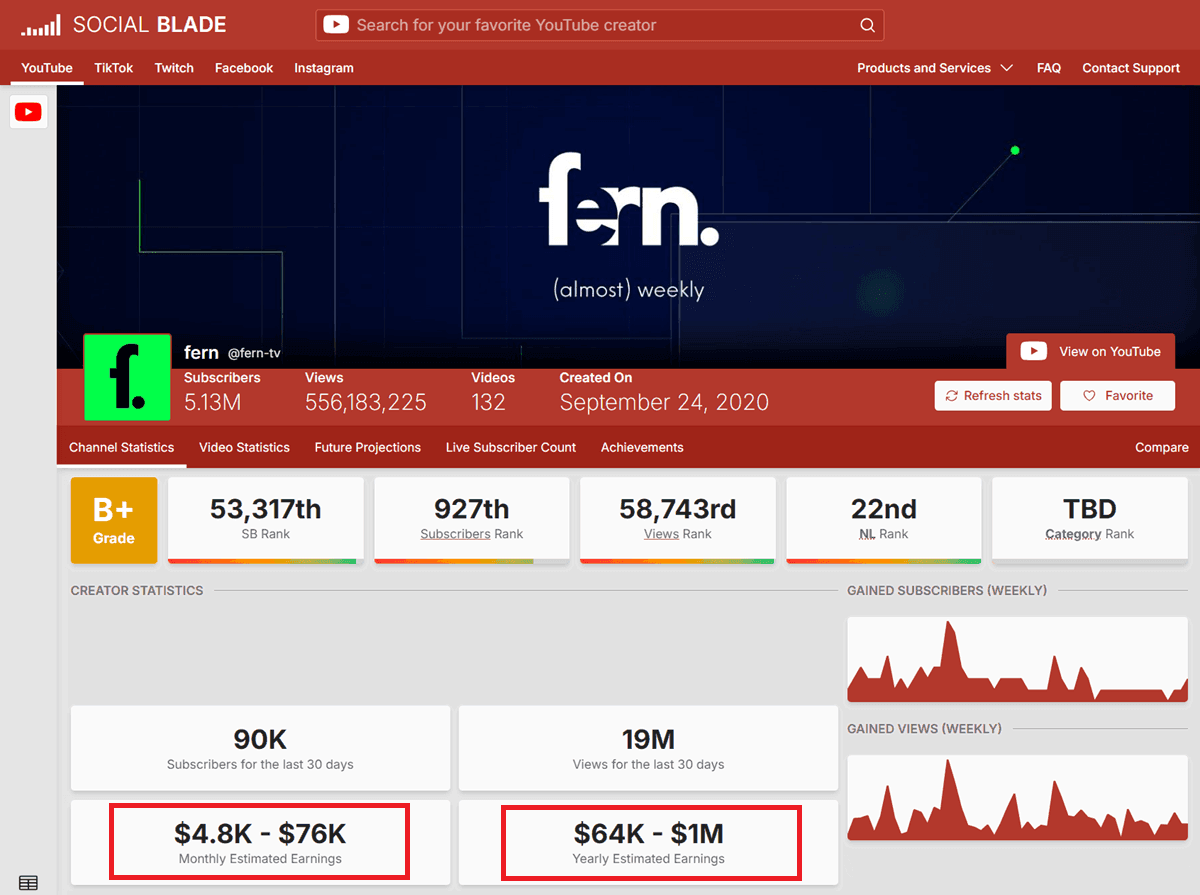
Your actual number depends heavily on niche RPM, upload consistency, and retention, which is exactly why 2 channels with similar subscriber counts can post wildly different income.
The trust signal worth repeating from earlier: any specific income figure attached to a course sales page should be treated as unverified marketing, not a benchmark. Base your own expectations on the mechanics covered in this guide, niche RPM, watch time thresholds, and diversified income streams, rather than a stranger’s screenshot.
5 Common Mistakes That Sink A Faceless Automation Channel
1. Picking a Low-RPM Niche
On YouTube, the amount you earn per thousand views (RPM) can vary a lot depending on your niche. Some topics only bring in a few dollars, while others can earn you much more for the same effort.
That’s why picking your niche is such an important decision. Choosing a low-RPM category means you’re starting out with less earning potential before you even upload your first video. A smart choice here can really pay off down the road.
📌 Important: YouTube RPM (Revenue Per Mille) is a key creator metric indicating how much you actually earn for every 1,000 video views after YouTube takes its 45% share. It includes ad revenue, channel memberships, Super Chats, and YouTube Premium. RPM typically lands between $1 and $4 for most general content and jumps to $12 or even more in high-value niches like business, finance, legal, and health. Understanding your RPM helps you set realistic earning expectations and make smarter decisions about the kind of content you produce.
2. Fully Automating with Zero Human Review.
This is exactly the kind of behavior YouTube’s inauthentic content policy was designed to catch. If you fully automate your channel without any real human oversight, you’re not just risking a single video getting flagged; you could lose monetization for the entire channel.
YouTube wants to see that there’s a real person behind the creative process, even if you aren’t on camera. Skipping this step means you’re building on shaky ground. Protecting your channel requires real human review to make sure your content stands out as authentic and valuable, not just mass-produced by AI or stock video templates.
3. Chasing Every Trend Instead of Building a Niche.
If your channel doesn’t have a clear focus or niche, YouTube’s algorithm gets confused about who your audience is. Even if you pour time and effort into making high-quality videos, the platform simply won’t know who to show them to, and your growth will stall.
Successful faceless channels pick a lane and stick to it, at least in the early stages. By consistently creating content around one topic, you help YouTube (and your viewers) understand what you’re all about. This makes it much easier to build momentum, attract subscribers who actually care, and see steady channel growth over time.
4. Relying on AdSense as the Only Income Stream.
Once your channel starts attracting a real audience, affiliate marketing and digital products often bring in more money than relying on ad revenue alone. Depending only on ads means your income can bounce up and down with every change in YouTube’s ad rates, which can be frustrating and unpredictable.
That’s why the most successful creators almost always diversify. They use affiliate partnerships, sell digital products, or even offer courses and memberships to their viewers. This way, they’re not left scrambling every time ad rates take a dip, and they build a more reliable, stable income over time.
5. Buying a Course Based on an Unverified Income Claim.
When you’re thinking about buying a Faceless YouTube Automation course, it’s easy to get distracted by flashy screenshots of supposed earnings or wild success stories. But these are almost always impossible to independently verify, and they don’t guarantee you’ll get the same results.
The smartest move is to dig into what the course actually teaches: Does it offer clear, step-by-step instructions? Is there real value in the curriculum? Also, check the refund policy: can you get your money back if it isn’t what you expected? Choosing a course based on what’s real and tangible protects you from disappointment and helps you make a smarter investment in your own learning.
So always evaluate any course on its actual curriculum and refund policy, not on a screenshot you cannot verify.
6. Treating “Faceless YouTube Channel Business” as “Effort-free.”
The channels that survive and monetize long-term don’t just set things up and hope for the best. Successful creators make it a habit to check on their video quality every week, look at what’s working (and what isn’t), and aren’t afraid to tweak their approach when the numbers change.
Treat your channel like a real business, not a set-it-and-forget-it project. The more you invest in improving and managing it, the more likely you are to see steady growth and consistent income.
Your 30-Day Plan To Start A Faceless YouTube Channel Business
Days 1 to 5: Validate a Niche
Search your niche keywords on YouTube, check how many top results are faceless, and confirm the upload frequency you would need to match to compete realistically.
Days 6 to 12: Build Your Production Workflow
Choose an all-in-one tool like Pictory or InVideo for your first videos, and set up vidIQ or TubeBuddy for keyword research before you script anything.
Days 13 to 18: Produce and Publish Your First 5 Videos
Write scripts with a real point of view, not unedited AI output, and batch record voiceovers and assemble video in a single focused session rather than spreading one video across a whole week.
Days 19 to 24: Set up Your Income Infrastructure
Add an email capture through beehiiv or Kit in your first video descriptions, and research affiliate programs relevant to your niche before you have an audience, so you are ready the moment you do.
Days 25 to 30: Review and Adjust
Check which of your first 5 videos retained viewers longest, and build your next batch around whatever topic or format performed best, not what you personally liked most.
If you want a broader system for building diversified income around your content, not just YouTube specifically, our own Digital Wealth Academy 3.0 covers the same product and monetization thinking that turns a single content channel into a real, diversified income base.
FAQ
Q: Is faceless YouTube automation still worth it in 2026?
A: Yes, if built as a real content business with human editorial oversight, not as a fully automated, set-and-forget system. YouTube’s January 2026 enforcement action against 16 channels, worth an estimated 10 million dollars in combined annual ad revenue, shows exactly what happens to channels that skip the human quality control step.
Q: How does YouTube automation actually make money?
A: Ad revenue through the YouTube Partner Program is one stream, but affiliate marketing, sponsorships, and digital products often earn more once a channel has any real audience. Diversifying beyond AdSense protects income from RPM swings and algorithm changes that affect ad revenue specifically.
Q: What are the real YouTube monetization requirements in 2026?
A: Full monetization requires 1,000 subscribers plus either 4,000 public watch hours in the past 12 months or 10 million valid public Shorts views in the past 90 days, confirmed directly on YouTube’s official creator page. A lower tier unlocking fan funding features is available at 500 subscribers plus 3,000 watch hours or 3 million Shorts views.
Q: Will AI-generated videos get demonetized on YouTube?
A: Not automatically. YouTube’s inauthentic content policy targets mass-produced, templated videos with no meaningful human input, not AI assistance itself. Content using AI for scripting, voiceover, or visuals stays eligible for monetization as long as a human drives the creative decisions and each video offers real, varied substance.
Q: How much does it cost to start a faceless YouTube automation channel?
A: A lean setup using AI script and voice tools plus basic analytics can run near $50-$60 a month, while a more complete stack with keyword research and thumbnail testing tools typically lands between $200 and $500 a month. Costs scale with how much production you handle yourself versus outsource to freelancers.
Q: Are faceless YouTube automation courses a scam?
A: Faceless channels themselves are a legitimate content model, but income claims used to sell automation courses are almost always self-reported and unverifiable. Evaluate any course on its actual curriculum, refund policy, and whether the underlying strategy makes sense on its own, not on a screenshot you cannot check.
Q: Which faceless YouTube niches earn the highest RPM?
A: Finance, investing, tech reviews, and business content typically carry the highest RPM because advertisers pay a premium to reach audiences researching purchases or financial decisions. Story narration and general facts content draw larger audiences but usually earn lower RPM, requiring higher volume for comparable income.
Q: Can you run a faceless YouTube channel with YouTube Shorts only?
A: Yes, reaching 1,000 subscribers and 10 million valid public Shorts views within 90 days qualifies a channel for full monetization without any long-form video required. Shorts ad revenue is pooled across the entire Shorts feed and typically pays less per view than long-form ads, so many creators use Shorts to qualify fast, then add long-form content for higher per-view income.
Q: What is the biggest mistake beginners make with YouTube automation?
A: Fully automating production with zero human review is the single biggest risk, since it directly matches the pattern YouTube’s inauthentic content policy was built to catch. A close second is relying on AdSense as the only income stream instead of layering in affiliate marketing, sponsorships, or digital products.
What To Do Next?
Faceless YouTube automation in 2026 works when you treat it as a real content business: human-reviewed scripts, a genuine niche, and diversified income beyond ad revenue, and it fails fast for anyone chasing a fully automated shortcut.
Pick one niche this week, validate it against real search demand, and produce your first 5 videos with a workflow you actually understand, not one a course sold you on faith. Track what retains viewers, then build more of exactly that.
If you want a broader framework for turning any content channel into diversified digital income, Digital Wealth Academy 3.0 covers the product and monetization side that pairs well with the content system in this guide.