
Real Faceless Digital Products Income Data for 2026


What Faceless Digital Products Income Actually Looks Like
A creator posts a screenshot of $8,700 in a single month. No face, no name, just a Stripe dashboard and a caption that says “quit my job.” The video gets 2 million views. What it does not show is that 90% of that revenue came from a single viral spike that has not repeated since.
That is the gap between the faceless digital products income people see online and what the data actually shows once you look past the screenshot.
Faceless digital products income means money earned from templates, ebooks, printables, or AI-generated assets sold without the creator ever appearing on camera or attaching their name to the brand. This guide covers what verified 2026 platform data actually says beginners, side hustlers, and full-time sellers earn, the specific factors that separate the two groups, and how to build toward a real number instead of chasing a fake screenshot.
What Are Faceless Digital Products?
Faceless digital products are downloadable files, templates, courses, or AI-assisted assets sold under a brand or shop name rather than a personal identity. The creator never appears on camera, and the product’s value lives entirely in the file itself, not in who made it.
This differs meaningfully from a creator brand business, where the person is the product. A coach selling their own coaching relies on personal trust built through their face and voice. A faceless shop selling Notion templates relies on the product solving a specific problem well enough that the creator’s identity never becomes part of the sales pitch.
Faceless businesses are booming for a structural reason, not a trendy one. AI tools cut production time from weeks to hours, marketplaces like Etsy and Payhip now handle payment and delivery without a developer, and niche audiences on Pinterest and Google search for exactly the kind of specific, no-camera-required product a solo creator can build.
Common faceless examples include Canva template shops, Notion productivity systems, printable planners, AI prompt bundles, and stock asset libraries. This model suits introverts, people building a side income around a day job, and anyone who would rather compete on product quality than personal charisma.
Digital Product Industry Statistics For 2026
Before looking at income numbers, it’s important to understand the size of the opportunity. This helps set realistic expectations.
| Metric | Data Figure | Source |
| Creator economy market size, projected by 2027 | Over $480 billion | Goldman Sachs Research |
| Digital product market size within that economy (2026) | Roughly $32 billion | InsightRaider |
| Share of creators earning under $15,000 a year | 50.71% | Neoreach Creator Earning Report |
| Global digital goods spending | $157.39 billion | Mordor Intelligence |
| Etsy active buyers (Q1 2026) | 86.5 million | Etsy SEC Filing |
| Notion users worldwide | Over 100 million | Notion Company Blog |
| Online education market size (2026) | Roughly $199.03 billion | Statista |
| Median monthly income, active Gumroad creator | $72 | InsightRaider, State of Gumroad 2026 |
All the sources show the same pattern: the digital product market is big and still growing, but most individual creators earn much less than the numbers you see in viral posts.
Can You Really Make Money Selling Faceless Digital Products
Short answer: yes, but the honest version depends heavily on a few key factors, not luck.
Creators who fail usually share the same pattern. They launch a broad, generic product with no defined buyer, skip building an email list, and give up before month 3, which is exactly when most sellers are still validating rather than earning. Successful creators usually focus on a niche they know, build their own traffic sources like SEO or email, and offer at least three products instead of just one.
InsightRaider’s 2026 Gumroad data backs this up directly. Multi-product sellers with 3 or more listings earn an average of $5,201 a month, 5.7 times more than single-product sellers. Niche selection also compounds this gap. InsightRaider separately found the median B2B-focused creator earns 3.4 times more than the median B2C creator, since business buyers pay for time saved in a way casual buyers rarely do.
How Much Can Beginners Realistically Earn
| Timeframe | Realistic Range |
| First month | $0 to $100 |
| First 90 days | $0 to $500 total |
| 6 months | $100 to $1,000 a month |
| 1 year | $500 to $3,000 a month |
| 2 years | $1,000 to $10,000+ a month, if consistently reinvested |
These income ranges are for active shops that market their products regularly, not for accounts that post once and then stop. The difference between the low and high ends mostly comes down to whether the seller built an email list and added another traffic source besides marketplace search.
Realistic Monthly Income Ranges By Stage
- Beginner (0 to 6 months): $0 to $500 a month, focused on validating a niche and finishing a first complete product rather than earning yet.
- Side hustle (6 to 18 months): $500 to $2,500 a month, with 3 to 5 products live and one working traffic channel beyond marketplace search.
- Part-time business (1 to 2 years): $2,500 to $7,000 a month, typically running an email list, a diversified product catalog, and at least one recurring offer.
- Full-time creator (2+ years): $7,000 to $20,000 a month, treating the shop like a real business with regular launches and active marketing across multiple channels.
- Agency scale (rare): $20,000+ a month, usually involving a small team, multiple product lines, and often a recurring membership or course as the anchor offer.
Income Expectations By Product Type
| Product Type | Typical Monthly Range For An Active Seller |
| Printables | $50 to $1,500 |
| Canva templates | $100 to $3,000 |
| Notion templates | $100 to $2,500 |
| AI prompt packs | $50 to $1,000 |
| Digital planners | $100 to $2,000 |
| Ebooks | $50 to $1,500 |
| Online courses | $200 to $10,000+ |
| Memberships | $200 to $8,000, growing monthly with retention |
| Automation systems and prompt libraries | $100 to $3,000 |
Courses and memberships can earn the most because each sale is worth much more than a $9 template. However, they also require more trust before someone is willing to buy.
The Truth About Viral Income Claims
“$100K in 30 Days” videos go viral because extreme results are more shareable than average ones, and social media algorithms reward whatever gets shared most. This is a classic case of survivorship bias. You’re seeing the one launch that succeeded, not the 49 others that failed because no one posts about the ones that didn’t work.
Revenue isn’t the same as profit. For example, a $10,000 month can shrink to $4,000 after you subtract software costs, ads, refunds, and taxes. Refunds alone often take 3% to 10% of gross revenue if you have a generous return policy. Advertising and affiliate commissions also cut into what you keep, and self-employment tax in the US can take up to a third of your net profit, depending on your tax bracket and state. None of these details show up in a screenshot.
Fake Income Screenshots And Screenshot Generators
This is the dark side of the digital product world that most people don’t talk about, but it has a huge impact on buyer trust.
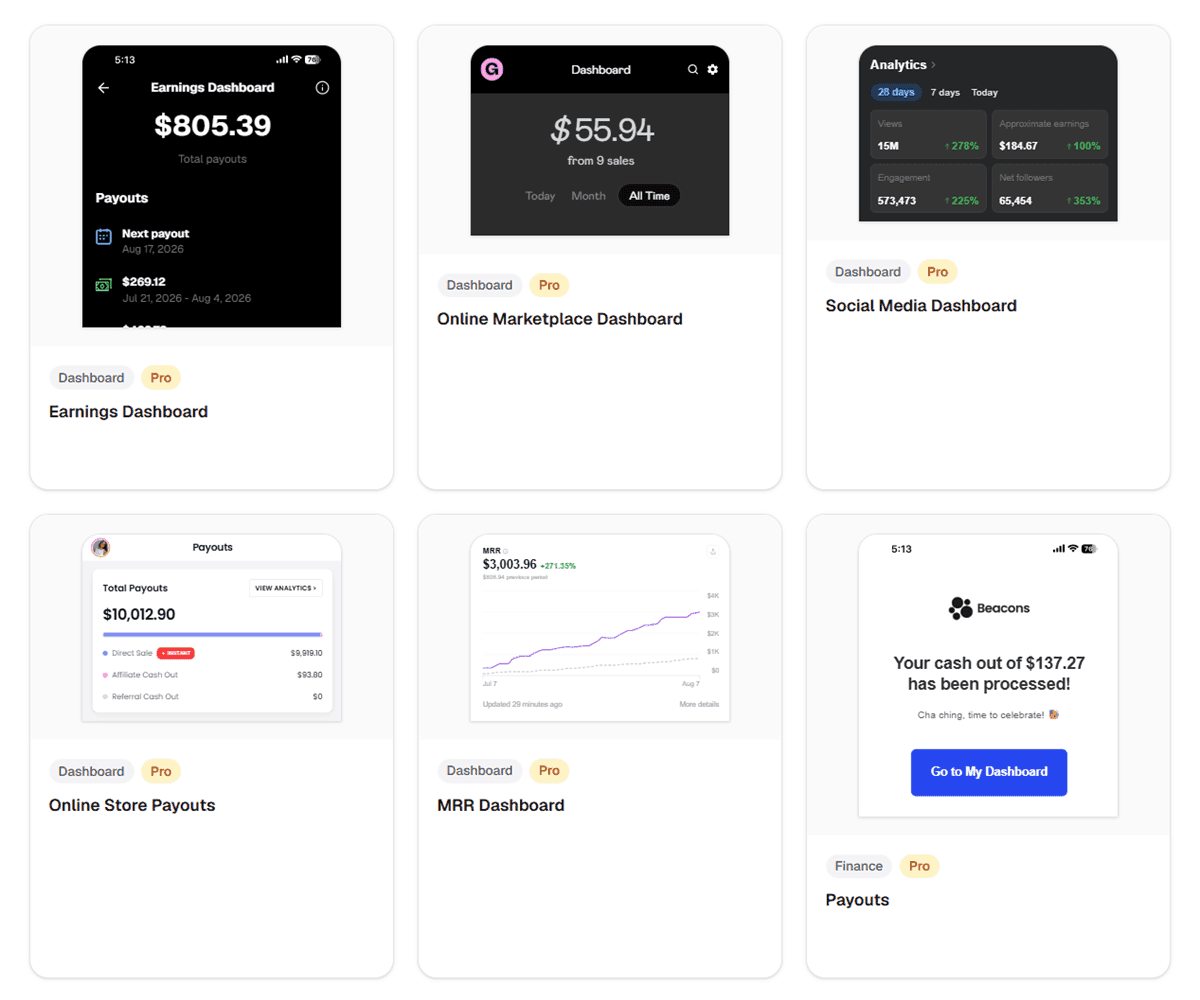
Free online tools can now create fake Stripe dashboards, Gumroad and Etsy earnings pages, and Shopify sales reports that look real. AI image generators make it almost impossible to spot a fake screenshot at first glance. People use these fakes because a made-up $20,000/month screenshot sells a $97–$497 course much better than an honest $2,000/month result.
The real harm falls on the buyer. Someone who believes a fake report might buy a course expecting to copy the results, follow every step, and end up earning far less than promised.
- A few red flags consistently identify manipulated screenshots:
- Suspiciously round numbers,
- Zero visible refunds or fee deductions anywhere in the breakdown
- A total with no supporting context like traffic or conversion data
Before trusting any income claim, check if the creator has shown steady numbers over several months, if their product catalog could realistically make that much, and if the proof is tied to something they’re selling you.
Real Income Vs. Fake Income
| Signal | Real Income Report | Fake Income Report |
| Traffic | Specific numbers with a named source | Absent or vague |
| Orders and conversion | Included, often under 3% | Never shown |
| Expenses | Broken out by category | Absent |
| Refunds | Disclosed as a percentage | Never mentioned |
| Taxes | Acknowledged as a real deduction | Ignored entirely |
| Long-term sustainability | Trends shown across multiple months | One highlight month only |
| Trust signal | Includes a mistake or a slow period | Only shows the best number |
How A Real Faceless Digital Product Business Works
Income doesn’t come from just one great product. It comes from building a system that turns strangers into buyers, and buyers into repeat customers.
Traffic arrives through a channel you control. A lead magnet converts that visitor into an email subscriber, captured through a tool like beehiiv or Kit, both of which let you start a list on a free plan before any cost applies.
Next, guide your subscriber to a low-priced product, then introduce your main offer, and finally suggest related bundles and upsells.
Affiliate products and a membership sit at the top of that funnel as the most durable revenue layers, since they do not require a brand new sale to generate next month’s income.
Not building an email list is the main reason a good product doesn’t turn into steady income. Without your own list, every sale depends on whether a platform’s algorithm decides to show your product that week.
The Step-By-Step Blueprint
Step 1: Choose a niche: Pick a specific audience you already understand rather than a broad category.
Step 2: Validate demand: Confirm people are already searching for and buying something similar before you build anything. On Etsy specifically, EverBee overlays estimated sales and revenue directly on search results, which turns this step into research instead of a guess.
Step 3: Do keyword research: Real search volume separates a viable idea from a guess.
Step 4: Find buyer pain points: Read reviews and comments in your niche to find what people are already frustrated by.
Step 5: Create your first product: Finish one complete product instead of starting 5 unfinished ones.
Step 6: Launch it: Publish your product before it feels perfect, because real feedback will teach you more than endless editing.
Step 7: Collect reviews: Ask your first buyers directly for feedback you can use publicly.
Step 8: Grow your email list: Add capture to every product page starting on day one.
Step 9: Optimize conversion: Improve your weakest listing based on actual data, not guesses.
Step 10: Scale: Add products, channels, and a recurring offer once the first system is proven.
Startup Costs for Faceless Digital Product Business
| Category | Typical Cost |
| Domain | $10 to $20 a year |
| Hosting (optional, only if not marketplace-only) | $0 to $15 a month |
| Email software | $0 to $49 a month |
| Design tools | $0 to $15 a month |
| AI tools | $0 to $40 a month |
| Marketplace fees | Percentage-based, no upfront cost |
| Advertising (optional) | $0 to start |
| Optional extras (courses, coaching, premium tools) | Varies widely |
You can get started for almost nothing by using free versions of Canva, ChatGPT, Claude, and Etsy. This removes the “I need money to start” excuse most beginners lean on.
Profit Margin Breakdown
Gross revenue minus marketplace fees (typically 10% to 15% combined on Etsy), minus refunds (typically 3% to 10%), minus software costs, minus taxes, leaves net profit. On a $2,000 gross month, that commonly lands between $1,300 and $1,600 in real take-home profit once every deduction is accounted for.
Pricing Strategy And Its Impact On Income
Low-ticket products under $20 build trust quickly through fast, low-friction purchases.
Products priced above $97 need stronger proof and positioning, because buyers want to feel confident before spending that much.
Bundles increase how much you earn per sale without extra work once you’ve already made the individual items. Showing everything that’s included and what each part would cost on its own helps justify a higher price without making it seem overpriced.
Lifetime deals and lower recurring subscriptions each trade a different tradeoff between upfront cash and long-term revenue, and licensing, including PLR and MRR products, adds a resale-based income layer on top of direct sales.
For beginners wanting a fast-start catalog instead of building everything from scratch, a pack like the Mega PLR Video Course Bundle gives you resellable content to list immediately, though it still needs sorting through for quality before it becomes a real product page.
One Sale Vs. Recurring Revenue
A single product sale ends the revenue relationship at checkout. A membership, subscription, or community charges an ongoing fee for continued access, which compounds instead of resetting to zero each month. Product updates delivered to existing members also increase retention, since buyers who see a catalog actively growing are less likely to cancel.
Best Selling Faceless Digital Products
AI prompts, Canva templates, Notion templates, spreadsheets, printables, digital planners, ebooks, business templates, resume kits, website templates, presentation decks, digital journals, stock photos, icons, fonts, automation systems, prompt packs, workflow templates, and educational resources all sell consistently within this model.
The most profitable products are usually aimed at business buyers, not casual consumers. These include premium B2B templates, AI workflow systems, business SOPs, agency resources, course bundles, prompt libraries, memberships, and automation packs. This matches the earlier point about B2B sellers earning more, since business buyers pay for time saved, not just looks.
Faceless Digital Product Ideas By Niche
| Niche Cluster | What Sells Best |
| Business, finance, and freelancing | Templates, SOPs, invoice systems |
| AI, programming, and productivity | Prompt libraries, automation workflows |
| Marketing and social media | Content calendars, swipe files |
| Education, students, and teachers | Study guides, lesson planning kits |
| Health, fitness, and wellness | Trackers, structured programs |
| Real estate and career | Client kits, resume and portfolio templates |
| Parenting, wedding, and travel | Printable planning kits |
| Photography, design, and music | Presets, asset packs, templates |
| Beauty, fashion, and cooking | Guides, planners, branded templates |
| Pets, gaming, astrology, and religion | Niche activity packs and guided journals |
How To Create Faceless Digital Products For Free
ChatGPT, Claude, and Gemini all handle drafting and brainstorming at no cost on their free tiers. Canva’s free plan, Google Docs, and Google Sheets cover design and written products.
Notion, Photopea, and CapCut round out template building and image editing. DaVinci Resolve and Figma handle basic video and interface work without a paid subscription anywhere in the stack.
For an initial structured draft specifically, Gamma turns a prompt into a formatted document in minutes, giving you a skeleton to rewrite rather than a blank page to stare at.
Best Platforms To Sell Faceless Digital Products
| Platform | Fee Structure | Built-In Traffic | Best For |
| Etsy | 6.5% + $0.20 listing + processing | Yes, marketplace search | Beginners with no audience |
| Payhip | 0% to 5% depending on plan | No | Lower fees once you have traffic |
| Gumroad | Flat 10% + $0.50 | No | Simple single-product setup |
| Shopify | 2.9% + $0.30 processing | No | Full brand control |
| Amazon KDP | Up to 70% royalty on ebooks | Yes, largest book marketplace | Ebook-heavy catalogs |
| Creative Market | Higher commission, curated audience | Yes | Design-conscious premium buyers |
| Skool | Flat monthly fee from $9 | No | Recurring paid communities |
Which Platform Makes The Most Money
There is no single winner, only the right tradeoff for your stage. Etsy wins on traffic for a total beginner. Payhip wins on margin once you already have buyers to send. Skool wins on recurring revenue once you have proof your content keeps people engaged month over month.
For higher-ticket courses or coaching offers sold from your own site, ThriveCart Pro Plus charges a one-time fee instead of an ongoing percentage, which changes the math considerably once your average order value climbs. The strongest sellers eventually run 2 platforms at once rather than betting everything on one.
Choosing The Right Niche
Be honest when weighing competition against demand. If a niche has no competition, it might mean there’s no demand, not that you’ve found a hidden opportunity.
Evergreen demand with niches that revolve around problems that exist year-round beats seasonal spikes over the long run.
Buyer intent is more important than just traffic numbers, because a small group of people actively looking for a solution will buy more than a large group that isn’t interested. Also, make sure your niche can support more than one product, so you can take advantage of the higher earnings that come from having multiple products.
Marketing Strategies That Drive Sales
For SEO and keyword research, KWFinder validates real search demand and connects directly to Claude through its official MCP server to pull keyword data into your writing workflow. SEOwriting.ai speeds up drafting the blog and product content that ranks for that research.
For growing an Instagram audience that feeds traffic into a shop, Outfame uses Instagram’s official API to find real, niche-relevant accounts. ManyChat then converts that audience into buyers by automating a direct message the moment someone comments a keyword.
Pinterest, Threads, YouTube, and Reddit each work as supplementary channels once your core SEO and email system is running, but none of them replace an owned email list as the highest-converting channel for a repeat sale. For creators who want one bundled dashboard covering their storefront and social links instead of juggling separate tools, SuperProfile combines a link-in-bio page with digital product checkout in one place.
How Audience Size Affects Income
| Audience | Realistic Income Ceiling |
| No audience, marketplace search only | $0 to $500 a month |
| 1,000 engaged followers or email subscribers | $200 to $1,500 a month |
| 10,000 engaged followers or subscribers | $1,000 to $6,000 a month |
| 100,000 engaged followers or subscribers | $5,000 to $30,000+ a month |
A well-engaged email list of 1,000 people often earns more than 10,000 passive social media followers, because email leads to more sales than social feeds controlled by algorithms. SEO traffic works in a similar way; it builds up over time, unlike a viral post that spikes and then disappears.
Automation And Outsourcing
Once set up, things like customer support, email automation, order fulfillment, and social media scheduling can mostly run on their own. This is what lets your business grow beyond just your own time. Many sellers hire freelancers for design and SEO writing when they can afford it, and bookkeeping software helps save time on tracking finances, especially during tax season.
Illustrative Income Examples By Stage
These examples are based on combined platform data from this guide, not on specific people. Detailed, verified public income data is rare and often hard to confirm.
- A complete beginner, 2 months in with one printable listed on Etsy and no marketing beyond the listing itself, matches the pattern shown in the beginner table above: a handful of sales totaling under $100.
- A weekend side hustle, 8 months in with 4 products and a small Pinterest presence, tracks with the side hustle tier: roughly $800 to $1,500 a month, consistent with InsightRaider’s multi-product seller data.
- A full-time creator, 3 years in with a diversified catalog, an email list of several thousand, and one recurring membership, lands in the $7,000 to $15,000 monthly range described in the full-time tier above.
- A multiple-product portfolio seller running 12 products across 2 platforms reflects the 5.7x multi-product advantage directly, since portfolio effects compound rather than add linearly.
- An SEO-driven business built primarily on ranked blog content and email capture shows the strongest long-term stability of any channel in this guide, since organic search traffic does not disappear the way a single viral post does.
Seasonal Trends
- Holiday spikes around Black Friday and Christmas commonly double or triple normal sales volume for gift-adjacent and planning products.
- Back-to-school season lifts teacher and student-focused products.
- Tax season lifts finance and budgeting templates.
- Wedding season lifts planning kits and stationery.
- Evergreen niches, ones tied to an ongoing problem instead of specific calendar dates, smooth out sales volatility and remain the more stable long-term foundation for your product catalog.
Legal And Copyright Considerations For AI-Generated Faceless Products
Most guides skip this section, but it’s becoming more important with every AI-assisted product you release.
The US Copyright Office requires human authorship for copyright protection, confirmed directly in its own AI Policy Guidance, and content generated entirely by AI with no meaningful human input cannot be copyrighted. This was reinforced when the Supreme Court declined to hear Thaler v. Perlmutter in March 2026, leaving that rule firmly in place.
Amazon KDP requires disclosure of AI-generated text, images, or translations through an internal checkbox that never appears to buyers and does not affect royalties or ranking, according to Amazon’s own policy documentation. Etsy requires a visible disclosure inside the listing itself under its Creativity Standards, and enforcement is real: Q1 2026 data shows roughly 12,000 listings removed and 8,500 warnings issued for undisclosed AI content in a single quarter.
Commercial licenses from AI tools like ChatGPT let you sell what you create, but they don’t give you copyright if the law doesn’t allow it. PLR and MRR products have their own licensing rules, and trademark issues are separate from copyright, especially if your design uses a real brand or character.
To protect yourself and your accounts, make sure you edit AI output significantly, add your own structure, and include original examples/data. Running your final draft through Originality.ai before publishing is a good way to check your work. If the AI score is still high after editing, you may need to rewrite more.
Common Mistakes That Limit Earnings
- Choosing an oversaturated niche without a specific angle wastes creation time competing against thousands of near-identical listings.
- Copying a competitor’s exact product instead of solving the gap in their reviews produces a weaker version of something that already exists.
- Poor product quality and setting prices too low will limit your income, no matter how much traffic you get.
- Ignoring SEO limits discovery to whatever a single social post happens to reach.
- Skipping customer research or not building an email list from day 1 leaves a seller guessing instead of improving based on real data.
- Ignoring analytics does the same.
- Launching too many unfinished products before proving one works spreads limited marketing effort too thin to build traction anywhere.
How Long Does It Take To Reach Income Milestones
| Milestone | Typical Timeframe |
| First sale | 2 to 8 weeks after a validated listing goes live |
| $100 a month | 1 to 3 months |
| $500 a month | 3 to 6 months |
| $1,000 a month | 6 to 12 months |
| $5,000 a month | 12 to 24 months |
| $10,000 a month | 18 to 36 months, with consistent multi-product execution |
| $25,000 a month | Hard, typically 3+ years with a team or a strong recurring offer |
The biggest challenge at every stage is not skill. It is quitting during the flat middle stretch between validation and compounding, right when SEO and email growth are working but have not yet become visible in monthly revenue.
Building A Faceless Digital Product Income Calculator
You do not need custom software to model this. Just multiply monthly visitors by your conversion rate to estimate orders. Then multiply orders by average order value to estimate gross revenue. Subtract platform fees, refunds, and expenses to reach a realistic profit forecast.
A shop with 2,000 monthly visitors, a 1.5% conversion rate, and a $25 average order value generates roughly 30 orders and $750 in gross revenue that month.
Model 3 growth scenarios: flat traffic, 20% monthly traffic growth, and 20% growth plus a conversion rate improvement, to see how much of your future income depends on traffic alone versus a better-converting offer.
Sample Faceless Digital Product Income Report
A useful report includes gross revenue, net profit, units sold, traffic sources, conversion rate, average order value, a platform breakdown if selling in more than one place, expenses, refunds, best-selling products, lessons learned, and a specific goal for next month. Skipping any of these turns a report into a highlight reel instead of a real business tool.
Digital Product Income Report Template
Track monthly revenue and profit, product-level performance, traffic by channel, email subscriber growth, conversion metrics, expenses, marketing ROI, new launches, customer feedback, key wins, the biggest challenge that month, and a concrete action plan for the next one. This template works whether you are documenting $200 or $20,000, and the habit itself is what builds real long-term improvement.
FAQ
Q: How much can beginners realistically make selling faceless digital products?
A: Most beginners earn between $0 and $500 a month in their first 6 months, with a meaningful share earning little or nothing in the first 90 days while validating a niche. This reflects normal business development, not a sign the model does not work.
Q: Are faceless digital products still profitable in 2026?
A: Yes, based on verified 2026 platform data showing a $32 billion digital product segment inside a $480 billion creator economy projected by 2027. Profitability depends heavily on niche selection, product diversification, and building an owned traffic source rather than relying on a single marketplace algorithm.
Q: Can I start a faceless digital product business with no audience?
A: Yes, marketplaces like Etsy supply buyer search traffic that a brand new seller cannot replicate independently, making them the practical starting point with zero following. Building an audience becomes more valuable once you want to reduce dependence on marketplace fees and algorithm changes.
Q: Can AI create faceless digital products for me entirely?
A: AI tools can speed up drafting significantly, but purely AI-generated content with no human editing carries no copyright protection under current US law and risks platform disclosure violations if not marked appropriately. Products that combine AI speed with real human editing and original examples both convert better and hold up legally.
Q: Which platform is best for faceless digital product sales?
A: Etsy suits beginners with no existing audience because of its built-in marketplace search, while Payhip suits sellers who already have traffic and want lower fees. Most established sellers eventually run more than one platform rather than depending on a single channel.
Q: How many products should I launch before expecting real income?
A: Verified 2026 Gumroad data shows multi-product sellers with 3 or more listings earn 5.7 times more than single-product sellers on average. A focused catalog of 3 to 5 proven products consistently outperforms either a single item or an unfocused, overly large catalog.
Q: Is faceless digital product income actually passive?
A: Fulfillment is genuinely passive since files deliver automatically after purchase, but the traffic and marketing that drive those sales require ongoing, active work, especially in the first year. Sellers who build an email list and diversify their catalog see the most stable, closest-to-passive results over time.
Q: How long until you see your first faceless digital product sale?
A: Most sellers with a validated, properly listed product see a first sale within 2 to 8 weeks, particularly on marketplaces with built-in search traffic like Etsy. Products launched with no niche validation or keyword research routinely take much longer, if a sale happens at all.
Final Verdict
$5,000 a month is possible, but only if you follow the timeline the data supports, usually 12 to 24 months of steady work, not the 30-day promises that get the most views. The creators who succeed treat this like a real business: they pick a specific niche, build a diverse product catalog, grow their own email list, and track their own numbers instead of relying on someone else’s screenshot.
Trust, quality, SEO, and repeatable systems always outperform hype when you look at the real data. Hype fades, but a solid system keeps growing. Start by building one validated product, add another traffic source besides marketplace search, and track your real numbers from the very first month. That’s what separates a screenshot from a real business.
If you’re feeling overwhelmed by scattered advice or tired of cobbling together tactics from different sources, there’s a simpler path. Digital Wealth Academy 3.0 walks you through niche selection, faceless digital product creation, and monetization. It’s made for creators who want more than just quick wins: it’s about building a business that actually lasts.
And when you’re ready to transform your shop into a memorable brand, something people recognize, trust, and seek out, the Ultimate Branding Course gives you the exact tools and strategies to make your business stand out. It doesn’t just teach logos or colors; it walks you through building an identity that connects with your audience and keeps them coming back.
**Figures marked “2026” reflect the most recently dated source available at the time of writing and are subject to change as platforms update pricing and policy.
